Ready for Some Nostalgia? Check Out How Phoenix Has Changed in the Past Century
Share this article:


A lot has changed since Phoenix was first settled in 1867 near the place where the Salt and Gila Rivers meet. While the Sonoran Desert may seem an unlikely location for a farming community, that’s exactly how Phoenix began, thanks to the construction of irrigation canals. As a matter of fact, the economy of Phoenix was driven by the “Five Cs” of Cattle, Citrus, Climate, Copper, and Cotton until after World War II, when high-tech industries began to move into the area. Following the war, the population of Phoenix exploded and the city became the template for suburban development in the US.
The Phoenix of today is home to a wide variety of businesses and cultural centers, including the home offices of four Fortune 500 companies: Avnet, Freeport-McMoRan, Insight Enterprises, and Republic Services, as well as the aerospace division of Honeywell, one of Arizona’s largest private employers. Chip maker Intel also has a strong presence in the Phoenix metro, with more than 11,000 people employed at its Chandler fabrication facilities – the company’s second largest site in the U.S. Phoenix is also the cultural hub of the region, boasting performing arts spaces, fine dining, sports complexes, and much more, including the Gammage Auditorium in nearby Tempe, which is the last public building to have been designed by Frank Lloyd Wright.
Join us at RentCafe on a virtual tour of the history of Phoenix to see how a town with a population of only around 65,000 in 1940 has become one of the largest and most prosperous cities in America in the last century.
To switch between the old and new images, simply drag the arrow back-and-forth.
1. Downtown and Central Phoenix skyline, view from Westward Ho Hotel
Downtown Phoenix has changed a lot since the 1930s, as you can see in this view from the famous Westward Ho Hotel. At 16 stories, the Westward Ho was once the tallest building in Phoenix, and from it looking south you might once have been able to make out Barrister Place a.k.a. the Jefferson Hotel at 109 S. Central Avenue, made famous by the opening shot of Alfred Hitchcock’s classic film Psycho. Today the view from the Westward Ho is a little less unobstructed, as gleaming residential and office towers – including 44 Monroe Apartments, the Freeport-McMoRan Center, Chase Tower, and Arizona State University’s striking Downtown Phoenix Campus – have added to the central Phoenix skyline.

 [/before-after]
Photo Credit 1930s: Rogue Columnist
Use the code below to embed the image on your website:
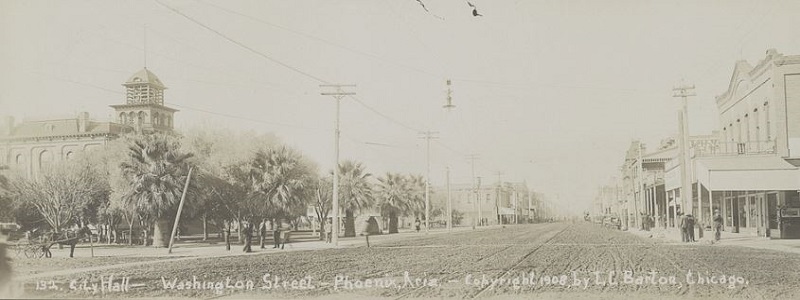
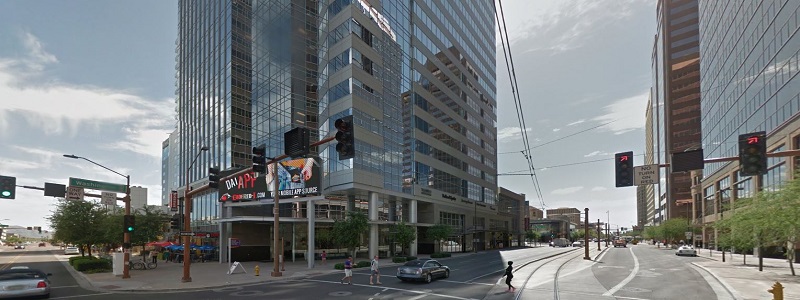
2. Washington Street with Original City Hall on the Left
A view down Washington Street in 1908 shows the original City Hall of Phoenix, which also housed the offices of the territorial government when they were moved from Prescott to Phoenix way back in 1889. Today, City Hall has moved down the street just a bit to 3rd and Washington, while the corner where the original City Hall once stood is now home to the Kimpton Hotel Palomar Phoenix.
 [/before-after]
Photo Credit 1908: Barton, Lester Clement, 1884-1918, photographer, Library of Congress
Use the code below to embed the image on your website:
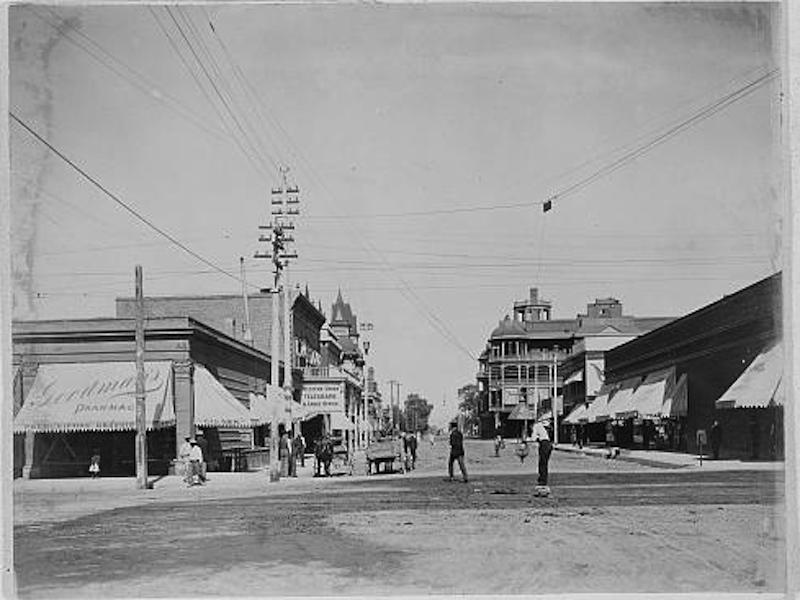
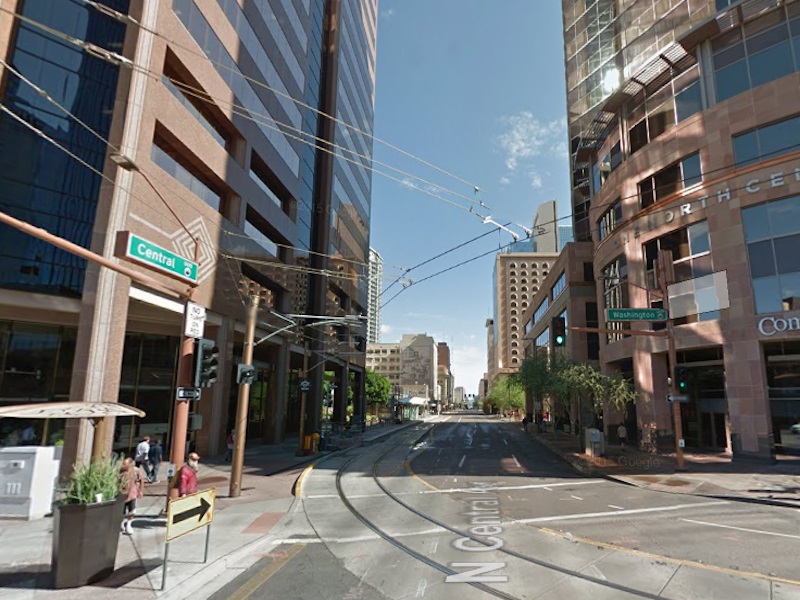
3. View Looking North on Central Avenue from Washington Street
The view from Washington Street up Central Avenue circa 1901 – 1910 shows a couple of vanished Phoenix landmarks, including the historic Stroud Building, which was demolished in 1984. The original Adams Hotel, which was destroyed by a fire in 1910, can be seen in the right rear of the photograph. Today the Renaissance Phoenix Downtown Hotel, which replaced the rebuilt Adams Hotel in 1975, stands where the Adams once stood.
 [/before-after]
Photo Credit 1901-1910: Credit ADLAPR, Library of Congress
Use the code below to embed the image on your website:
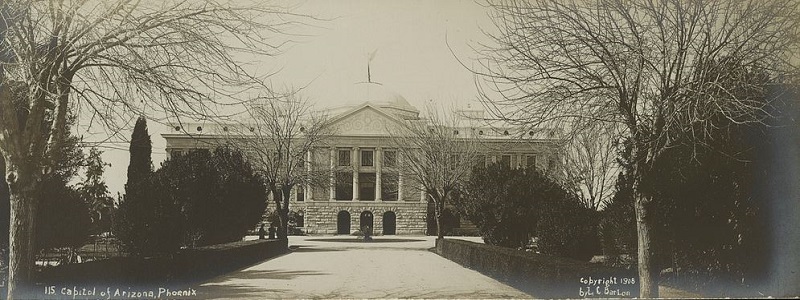
4. Capitol of Arizona
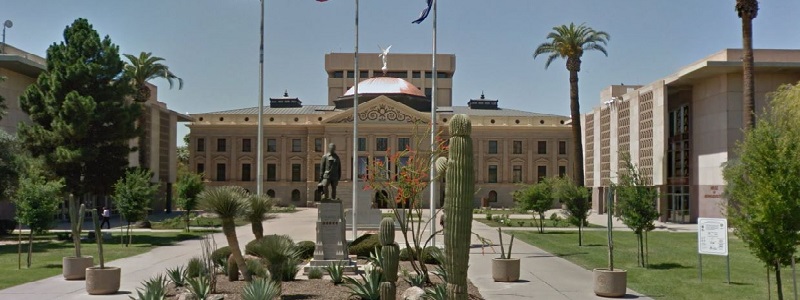
While much of Phoenix has changed a lot over the last hundred years, the Arizona State Capitol building still looks much as it did when it opened in 1901. This 1908 photograph shows it before the expansions were added to the west side of the building in 1918 and 1938, but otherwise things have stayed very much the same. The difference, of course, is that the State Capitol building no longer houses the State Legislature, which moved into the current house and senate buildings in 1960. In 1975, an executive tower was constructed to house the Governor’s Office, and in 1978 the original State Capitol building was opened as the Arizona Capitol Museum, which it still houses today.
 [/before-after]
Photo Credit 1908: Barton, Lester Clement, 1884-1918, photographer, Library of Congress
Use the code below to embed the image on your website:
5. The Former Adams Hotel at the NE Corner of Central and Adams Streets
The old Adams Hotel was visible in our earlier view down Central Avenue from Washington Street, but here’s a better look at the historic hotel before it was claimed by fire. Originally built in 1896, the Adams Hotel was, at the time of its construction, the largest and most expensive building in Phoenix. When it burned down in 1910, newspapers at the time referred to it as “Arizona’s most famous hostelry.”
Thanks to the quick work of local firefighters, all the guests of the hotel were saved from the blaze, but sadly the hotel itself was consumed, only to be replaced by a new five-story Adams Hotel made from reinforced concrete that claimed to be “absolutely fireproof.” This new Adams Hotel stood until 1973, when it was torn down and replaced by the Renaissance Phoenix Downtown Hotel, whose distinctive curved windows can be seen on the left side of the street in the modern photo.

 [/before-after]
Photo Credit 1908: Barton, Lester Clement, 1884-1918, photographer, Library of Congress
Use the code below to embed the image on your website:
6. Aerial View of Phoenix
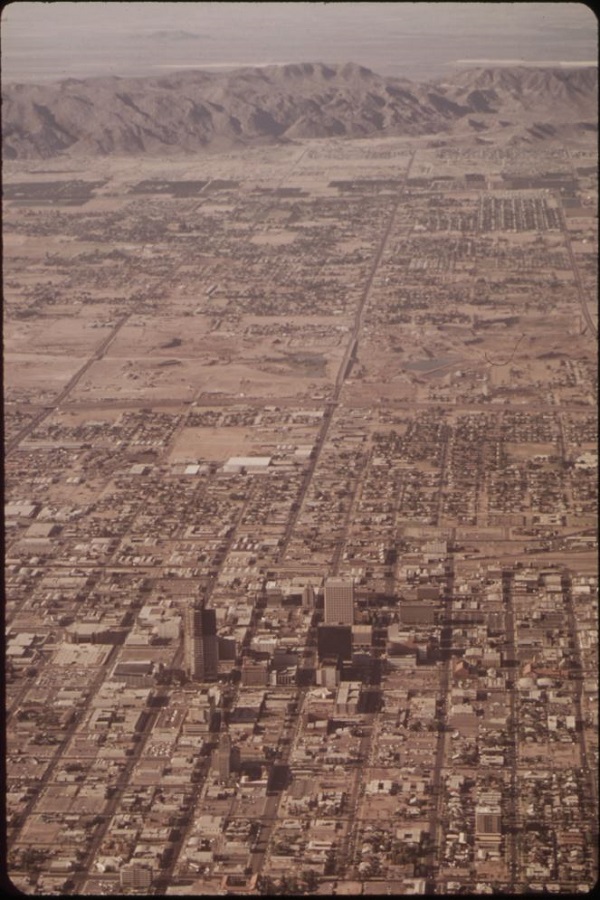
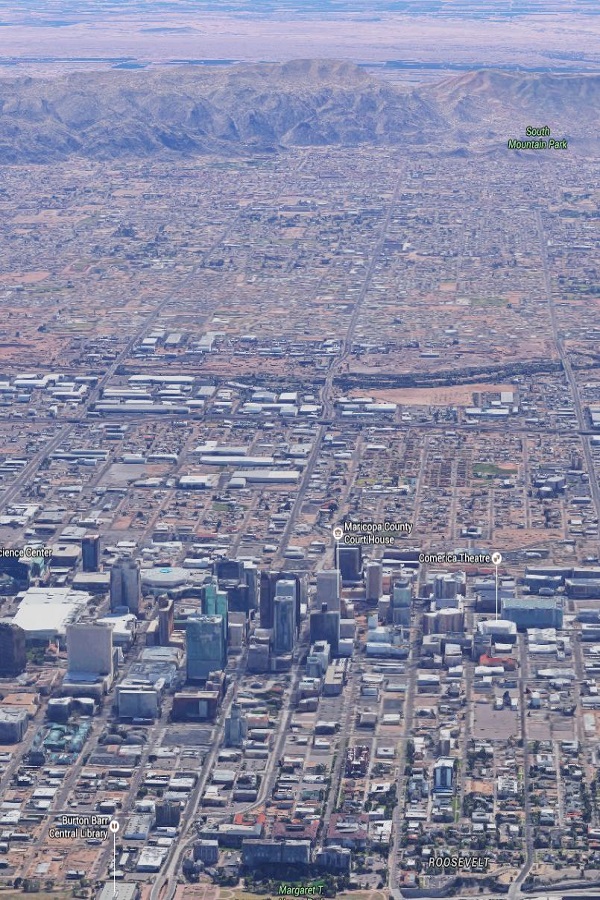
Phoenix has come a long way just in the few short decades since 1972. In this earlier aerial photo of the city, you can spot only a handful of buildings that stand more than a few stories tall, while farmland and empty ground can be seen out near the edges of the valley. By 2016, the Phoenix skyline is bristling with gleaming towers, and businesses and homes stretch all the way to the edges of South Mountain Park.
 [/before-after]
Photo Credit 1972: By Keyes, Cornelius M. (Cornelius Michael), via Wikimedia Commons
Use the code below to embed the image on your website:
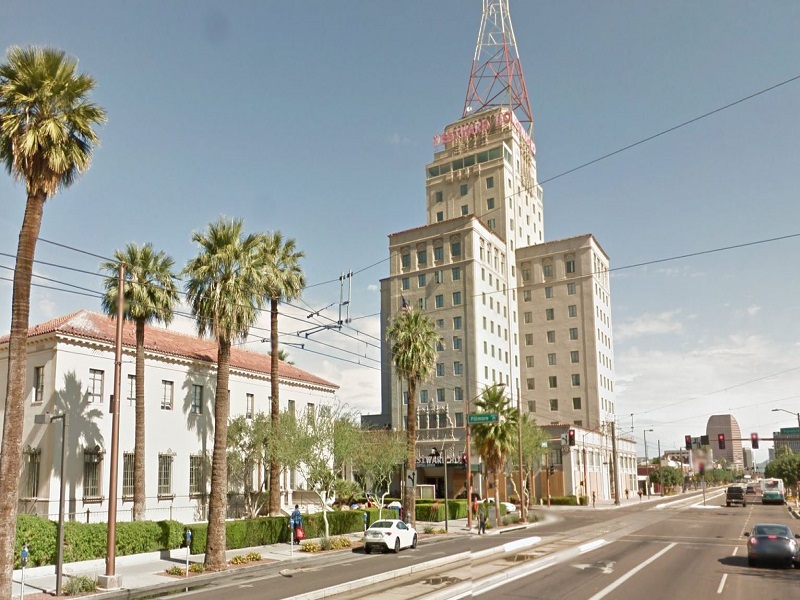
7. Post Office and Westward Ho Hotel
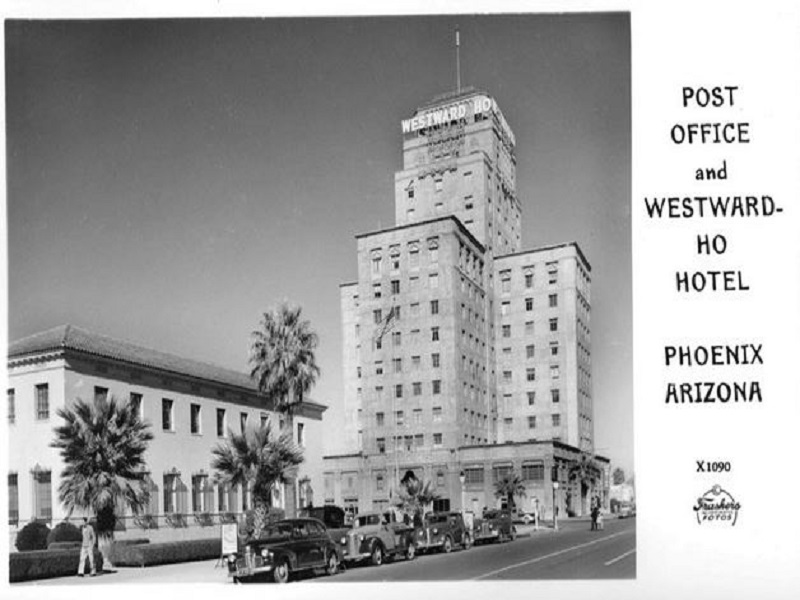
Earlier we showed you a view of the downtown Phoenix skyline from the Westward Ho Hotel, now here’s a look at the building itself, along with the historic U.S. Post Office building. The Westward Ho is a Phoenix landmark, and was the tallest building in the city until the construction of the Meridian Bank Tower in 1960. The U.S. Post Office building operated as a post office and housed federal government tenants until 1968, when a new post office building was constructed. Today, the building itself, which is on the National Register of Historic Places, is a part of Arizona State University’s Downtown Phoenix Campus.
 [/before-after]
Photo Credit 1940s: Frasher Foto Postcard Collection, Pomona Public Library
Use the code below to embed the image on your website:
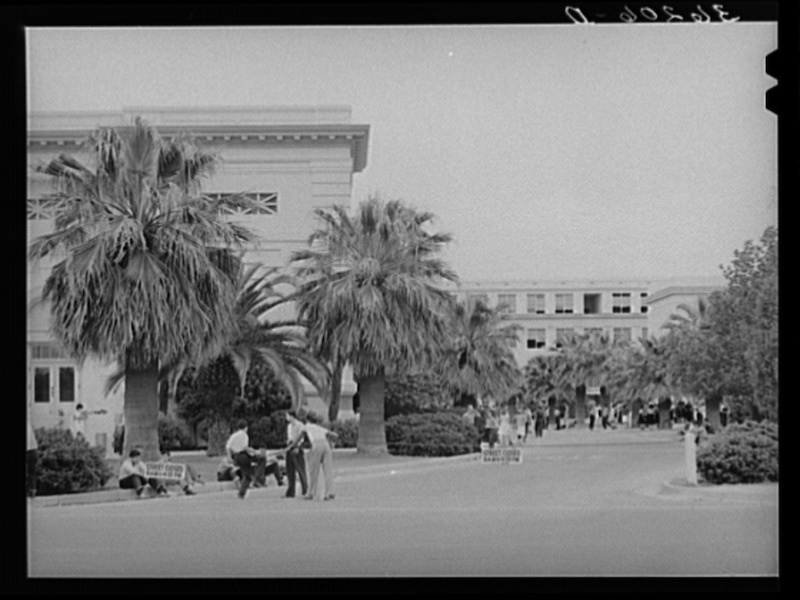
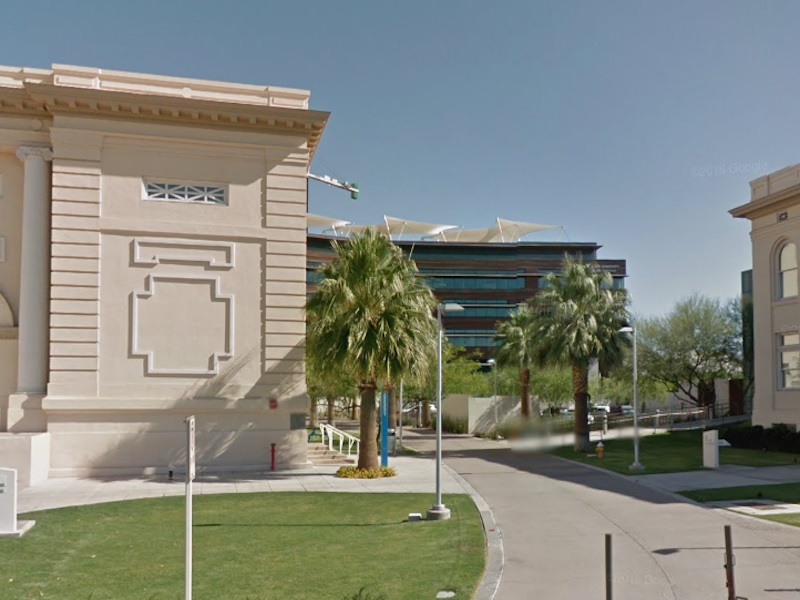
8. Phoenix Union High School and Northern Arizona University-Phoenix Biomedical Campus
What was once the main high school for the city of Phoenix is now a part of the University of Arizona Campus, specifically housing colleges of medicine and pharmacy, as well as the Arizona Biomedical Collaborative. The original high school closed in 1982, along with East and West High Schools, but left its namesake in the existing Phoenix Union High School District. While the school was still in session, its mascot was the Coyotes, and its athletic programs won more than 100 Arizona state championships. Today, the cutting edge Northern Arizona University-Phoenix Biomedical Campus can be seen in the background of the picture.
 [/before-after]
Photo Credit 1940s: Lee, Russell, 1903-1986, photographer, Library of Congress
Use the code below to embed the image on your website:
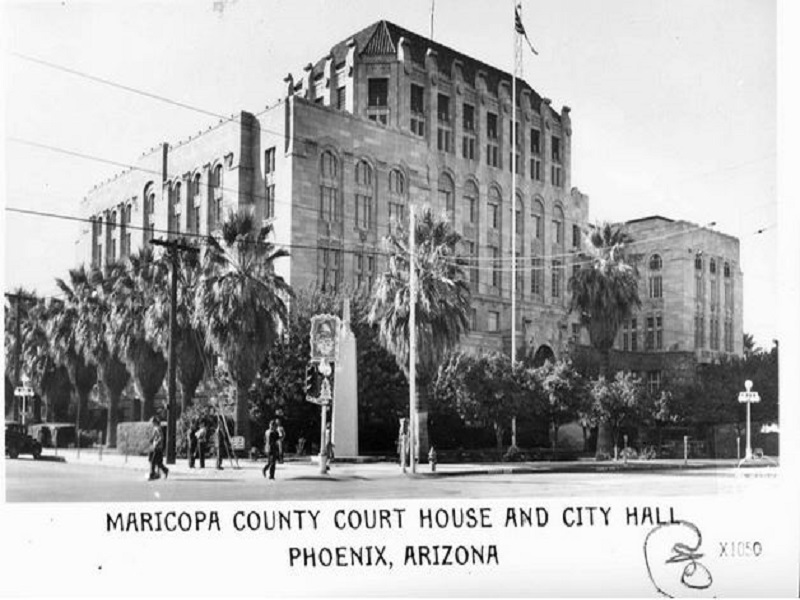
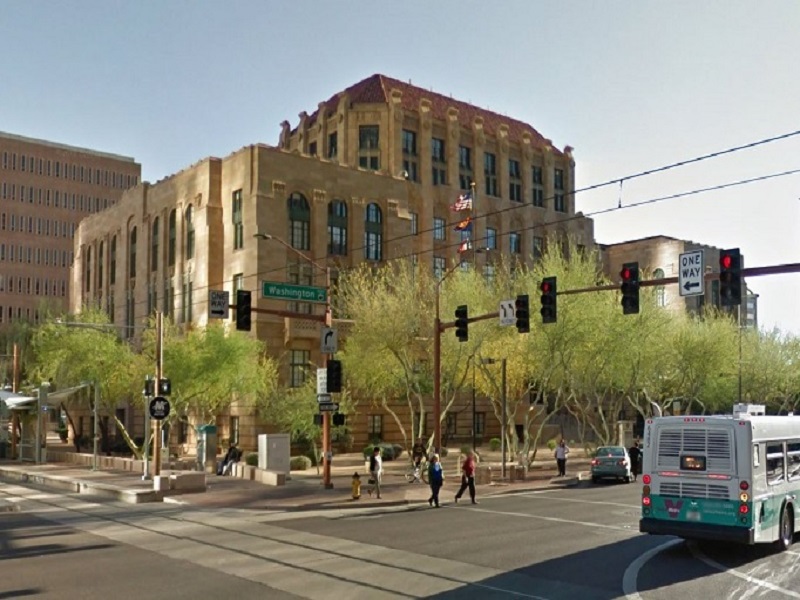
9. Maricopa County Court House and City Hall
We got a glimpse of the original Phoenix City Hall way back in our view of Washington Street in 1908, but by 1927, Phoenix had outgrown the original City Hall, which was constructed in 1889, and a new structure which doubled as the Maricopa County Courthouse was built to replace it. While today there is an even newer City Hall, and many of the Maricopa County governmental functions have moved to the Maricopa County Governmental Complex built in 1964, the 1927 building still stands and serves not only the Superior Court but also houses the Maricopa County Justice Museum on the sixth floor.
 [/before-after]
Photo Credit 1930s: Frasher Foto Postcard Collection, Pomona Public Library
Use the code below to embed the image on your website:
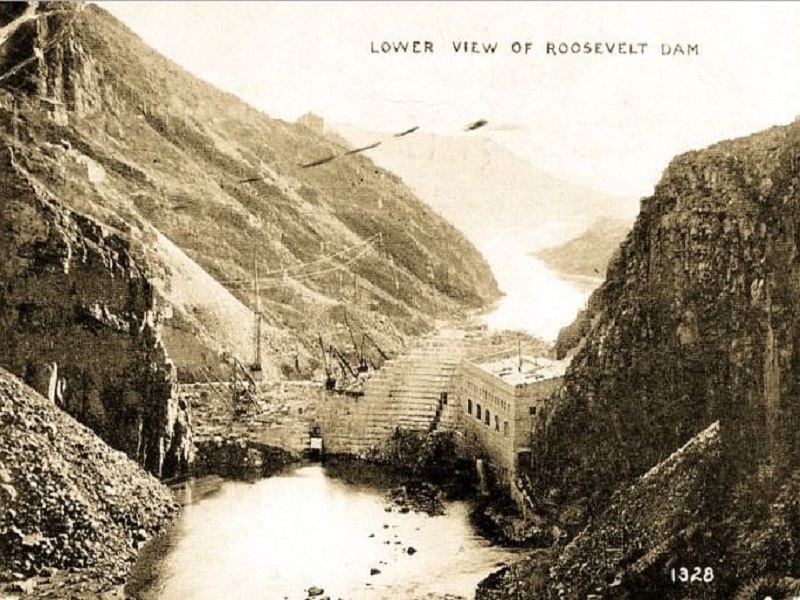
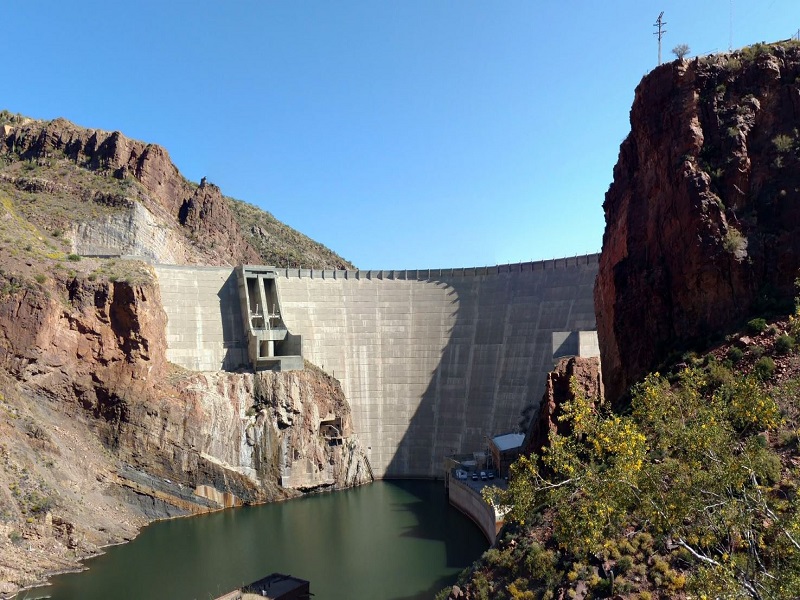
10. Theodore Roosevelt Dam
The very first dam to the be built under the National Reclamation Act, which was signed into law by then-president Theodore Roosevelt in 1902, the Theodore Roosevelt Dam began construction in 1903 and was completed in 1911. Roosevelt himself attended the dedication. Standing 357 feet high, the Theodore Roosevelt Dam was, at the time of its construction, the largest masonry dam in the world.
While it was designed and built primarily to supply water for irrigation and control flooding, it also provides hydroelectric power, which also made it the first multi-purpose dam ever built. Our 1908 photo shows the dam in mid-construction, while today it still stands much as it did when it was completed, despite renovations and expansions in 1989-1996, forming the Theodore Roosevelt Lake in the mountains east of Phoenix.
 [/before-after]
Photo Credit 1908: Arizona100
Use the code below to embed the image on your website:
As you can see, Phoenix has grown a lot over the last hundred years, but also managed to hold on to much of its history and cultural heritage. Got a favorite Phoenix landmark or historical tidbit that wasn’t included in our look back at the architectural history of Phoenix? Send it our way – along with a photo! – and maybe you’ll see it in the next installment!
Share this article:


Amalia Otet
Amalia Otet leads publishing and content for Yardi products, where she turns real estate data and market trends into stories that inform and inspire. Outside of work, Amalia strives to live beautifully - one green step at a time.
Sign up for The Ready Renter newsletter
Get our free apartment hunting guide — plus tips, trends and research.




Related posts
San Diego vs. Los Angeles: Which city fits your renter budget?
Los Angeles and San Diego share a coastline, a climate and a reputation for expensive rent, but the day-to-day cost of living in each city…
Tempe, AZ on a budget: The most affordable neighborhoods to call home
Tempe is the kind of city where college-town energy meets serious career infrastructure. It’s home to Arizona State University, one of the largest universities in…

Finding an apartment for a new job: How to nail your search on a tight deadline
Landing a new job in a different city is exciting, but it comes with an immediate challenge: where are you going to live? Finding an…
Subscribe to
The Ready Renter newsletter