Share this article:


With more than 23,500 new apartments across 14 different zip codes, the Minneapolis apartment boom shows no signs of slowing down. Understanding where these developments are concentrated can help apartment hunters find the ideal balance of urban energy, lakeside charm, and convenient transit access as they navigate this expanding market.
Where should you start your apartment search in Minneapolis?
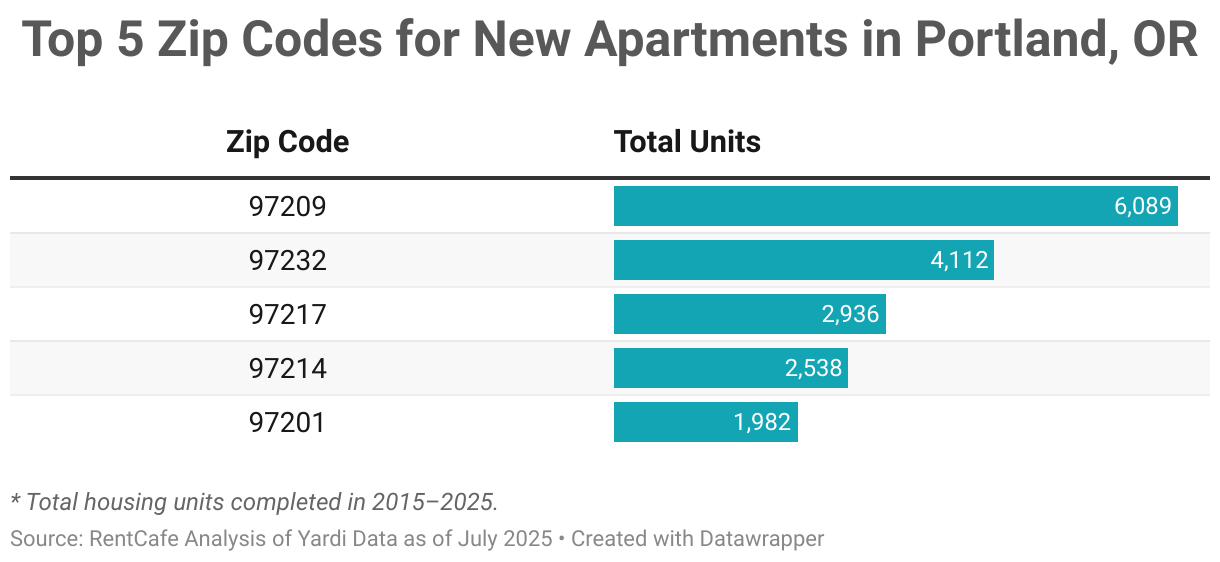
Here’s where apartment construction concentrated in the last decade:
-
- Zip code 55414 added 5,319 new apartments, the most in the metro area.
- Zip code 55401 gained 3,576 new rentals.
- Zip code 55415 welcomed 2,887 new apartments.
- Zip code 55408 added 2,319 new rentals.
- Zip code 55413 built 1,715 new apartments.
Living in Minneapolis offers a distinctive Midwestern lifestyle defined by an active outdoor culture and one of America’s most bike-friendly environments. The cost of living in Minneapolis is about 3% lower than the Minnesota state average and 7% below the national average, making it an appealing option for those seeking urban amenities without the high price tags of major coastal cities.
Here’s what you need to know about the neighborhoods where apartments are being built.
5,319 new apartments put zip code 55414 at the top of the construction list
Zip code 55414 added 5,319 new apartments, making it the most active area for residential development. The zip code covers the Dinkytown and University of Minnesota area, including the East Bank campus and Prospect Park. Transit options include the Green Line light rail, extensive Metro Transit bus routes, and the Transitway for year-round cycling.
Major employers immediately accessible include the University of Minnesota, Fairview Health Services, and various research facilities, with downtown Minneapolis reachable in about 15–20 minutes via light rail.
Zip code 55401 added 3,576 new apartments
Zip code 55401 gained 3,576 new apartments, reflecting the transformation of the urban core into a 24-hour residential neighborhood. The zip code includes the North Loop warehouse district and the central business district along Nicollet Mall.
The area is served by both the Blue Line and Green Line light rail, as well as the city’s climate-controlled skyway system for winter walkability. Nearby job centers include the Target headquarters, Wells Fargo, US Bank, and Hennepin Healthcare, allowing many residents to walk to work or commute in under 10 minutes.
2,887 new apartments expand housing options in zip code 55415
Zip code 55415 added 2,887 new apartments, increasing rental options in South Minneapolis near the diverse Phillips neighborhood. The zip code offers transit-oriented projects with direct access to the Blue Line light rail and the Midtown Greenway bike highway.
Downtown jobs are about 10–15 minutes away, while major employers reachable in roughly 15–20 minutes include Allina Health, Children’s Minnesota, Abbott Northwestern Hospital, and Minneapolis–St. Paul International Airport.
Zip code 55408 delivers 2,319 new apartments
Zip code 55408 added 2,319 new apartments, placing renters in the heart of the lifestyle-oriented Uptown district. The zip code includes the commercial core around Lake Street and Hennepin Avenue, sitting within walking distance of Lake Bde Maka Ska and Lake Harriet.
The area benefits from frequent Metro Transit bus service and extensive bike infrastructure along the Chain of Lakes trails. Nearby employment opportunities include businesses along the Hennepin Avenue corridor and Southdale area employers, with downtown accessible in roughly 10–15 minutes.
1,715 new apartments grow zip code 55413’s inventory
Zip code 55413 added 1,715 new apartments, reinforcing its position as an arts-oriented community east of the Mississippi River. The area surrounds the Northeast Arts District and features local breweries and creative businesses. Residents rely on extensive bus service for transit connections, with future access planned for the Green Line extension.
Employment opportunities surround the zip code, with concentrations of creative industry businesses and small manufacturers locally, while downtown Minneapolis and University area employers remain accessible within 10–20 minutes.
Top 5 zip codes for new apartments in Minneapolis, MN
| Zip code | New apartments |
|---|---|
| 55414 | |
| 55401 | |
| 55415 | |
| 55408 | |
| 55413 |
* Total new apartments completed between 2015 and 2025.
Source:
RentCafe.com analysis of Yardi data as of July 2025
Minneapolis’s rental market remains resilient as steady institutional demand and a strong corporate presence continue to drive multifamily performance across the city. Development has concentrated in submarkets offering excellent bike infrastructure, transit access, and lifestyle amenities, supporting long-term renter interest in neighborhoods like the North Loop and the University corridor.
While new supply has entered the pipeline, consistent demand from the healthcare, education, and retail headquarters sectors has kept the market balanced. Ongoing economic diversification continues to reinforce Minneapolis’s position as one of the Midwest’s most stable and dynamic rental markets.
FAQ: Renting in Minneapolis’s fastest-growing zip codes
Q: How many new apartments have been built across these top Minneapolis zip codes in total?
A: A total of 23,561 new apartments have been completed across Minneapolis over the last ten years.
Q: Which zip codes have the most new apartments in Minneapolis, and how many were built in each?
A: Zip code 55414 leads the metro with 5,319 new apartments, followed by 55401 with 3,576 new apartments, 55415 with 2,887 new apartments, 55408 with 2,319 new apartments, and 55413 with 1,715 new apartments.
Q: How accessible are Minneapolis’s high-supply neighborhoods by public transportation?
A: Most high-supply neighborhoods have excellent transit access, with service from the Blue Line, Green Line, extensive bus routes, and year-round bike trails allowing quick connections to downtown and the University of Minnesota.
Q: Which major employers are within commuting distance of Minneapolis’s top construction areas?
A: Employers include the University of Minnesota, Target, UnitedHealth, Wells Fargo, US Bank, and major healthcare systems such as Fairview Health, Allina Health, and Hennepin Healthcare.
Q: How does the cost of living in Minneapolis compare to the average for Minnesota?
A: The cost of living in Minneapolis, MN is 3% lower than the state average and 7% lower than the national average.
Methodology
RentCafe.com is a nationwide apartment search website that enables renters to easily find apartments and houses for rent throughout the U.S.
This study uses data from 2015–2025, with the ‘past decade’ referring to this period.
Share this article:


Adina Dragos
Adina Dragos is a real estate writer and research analyst with RentCafe. She has solid experience in real estate writing, covering topics ranging from best cities for renters and the top cities for rental activity to cost of living. Her work was featured in several prominent media channels such as Axios, The Dallas Morning News, ConnectCRE and The New York Times.
Sign up for The Ready Renter newsletter
Get our free apartment hunting guide — plus local insights, trends and research.




Related posts

Detroit vs Chicago: Which Midwest city is more affordable for renters?
Detroit and Chicago are about 280 miles apart, making a move between the two a realistic option for many Midwestern renters. Maybe you’ve landed a…
Public transit options for renters in Newark, NJ: How to get around without a car
Newark renters can live car-free using PATH, NJ Transit rail, the Newark Light Rail and an extensive bus network, with Manhattan reachable in about 20…

Touring apartments in Boise, ID? Ask these questions before you sign a lease
Boise sits where high desert runs into the Rocky Mountain foothills, and it still moves at a small-town pace even as the Treasure Valley fills…
Subscribe to
The Ready Renter newsletter