
Share this article:


Looking for apartments in Miami? You’re searching in the country’s hottest rental markets, where securing a rental apartment means competing with a dozen of other applicants, regardless of the time of year. But while many renters are focused on how much space they can get within their budget or Instagram-worthy kitchens, savvy apartment hunters also consider something that can save them serious money and stress: public transit in Miami.
Whether you’ve already moved a few times in Miami or you’re thinking of relocating here, understanding how Miami’s public transit system works can make the difference between an easy commute and hours stuck in traffic.
The Miami public transit network may not be as extensive as in some other major cities like Boston or New York, but it still offers several practical options to fit different lifestyles. From elevated trains to free neighborhood trolleys, renters have multiple ways of getting around without relying on a car.
Here’s a breakdown of Miami’s main public transit options:
Metrorail: Miami’s rapid transit backbone
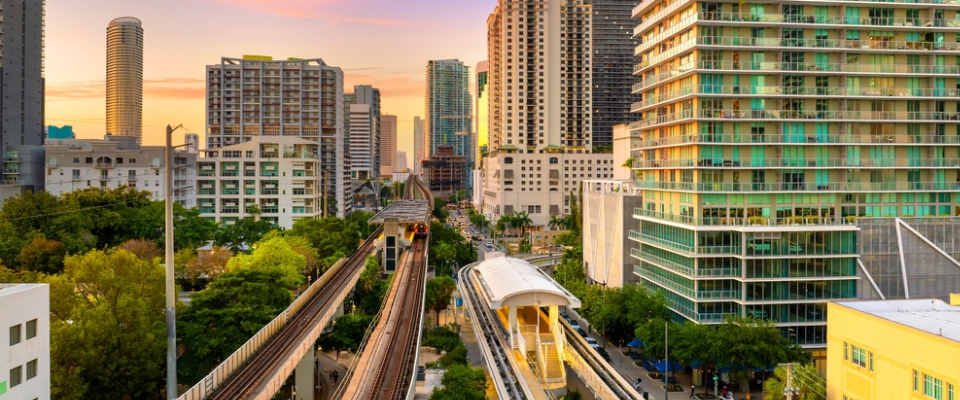
Miami’s elevated Metrorail system is the city’s main rapid transit network, connecting essential destinations including Downtown Miami, Coral Gables, Miami International Airport and South Miami. Stretching 25 miles with 23 stations across two lines, it offers reliable service every 6 to 15 minutes during peak hours.

For apartment seekers, living near a Metrorail station is a major advantage. The system avoids surface traffic, providing consistent commute times no matter the road conditions. Popular stops like Brickell, Government Center and University connect directly to major job hubs and educational institutions.
Key benefits for renters:
- Direct airport connection eliminates ride-share costs
- Climate-controlled stations and trains
- Integration with other transit systems
- Reduced parking expenses in downtown areas
Metromover: Free transportation in the urban core
The Metromover serves as Downtown Miami and Brickell‘s automated people mover, operating completely free of charge. This elevated system runs across three loops covering 4.4 miles, linking major office buildings, shopping centers, hotels and residential towers.
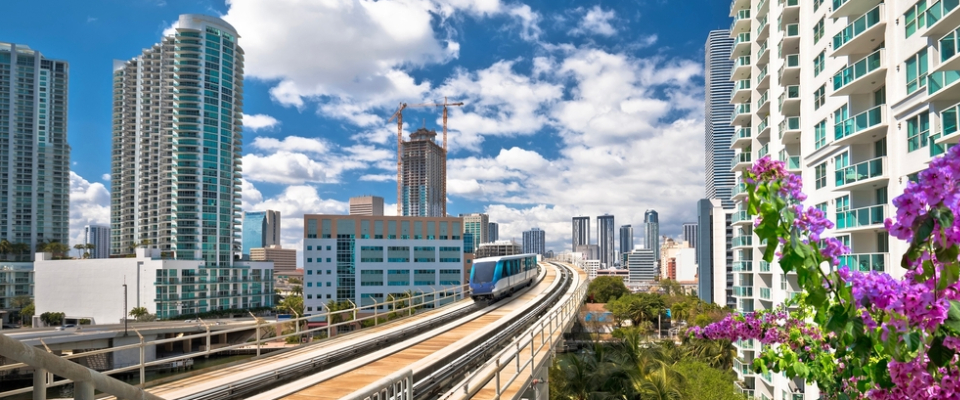
For many downtown residents, the Metromover is a key part of daily life. It also connects directly to Metrorail at Government Center, giving riders access to the wider Miami-Dade transit system at no extra cost.
Ideal for renters who:
- Work in downtown office buildings
- Prefer car-free urban living
- Value walkable neighborhood amenities
- Want to minimize transportation expenses
Metrobus: Comprehensive county coverage
Miami-Dade’s Metrobus network runs more than 95 routes across 1,000 square miles, making it the county’s most extensive public transit option. While travel times can be affected by traffic, the buses reach neighborhoods not covered by rail.

The system is particularly valuable for renters in the suburbs, offering vital connections to jobs, shopping and medical centers. Many routes run 24/7, ensuring you can get where you need to go around the clock.
Advantages for renters:
- Serves areas beyond rail coverage
- Connects with all other transit systems
- Express routes reduce travel times
- Affordable monthly passes available
Brightline: High-speed regional connection
Brightline’s modern high-speed rail links Miami with Fort Lauderdale, West Palm Beach and Orlando, reshaping how people travel across South Florida. The MiamiCentral station, located near Downtown, offers convenient access to this service.
While designed mainly for intercity trips, Brightline also expands to job and lifestyle opportunities beyond Miami. It’s especially valuable for professionals working across multiple cities and for residents looking for quick weekend getaways.
Perfect for renters who:
- Commute to other South Florida cities
- Travel frequently for business
- Enjoy exploring the broader region
- Value comfort and reliability
Miami Trolley: Free neighborhood circulation
Miami’s free trolley system serves neighborhoods such as Little Havana, Coconut Grove, Wynwood and Miami Beach. These air-conditioned trolleys run on fixed routes, connecting residents to local businesses, cultural attractions and transit hubs.

The trolley system improves neighborhood walkability while providing practical transportation for daily errands. Each route reflects its community’s character while ensuring residents can access essential services without driving.
Neighborhood routes include:
- Coral Way Trolley (Little Havana)
- Coconut Grove Trolley
- Wynwood Trolley
- Miami Beach Trolley
Tri-Rail: South Florida regional access
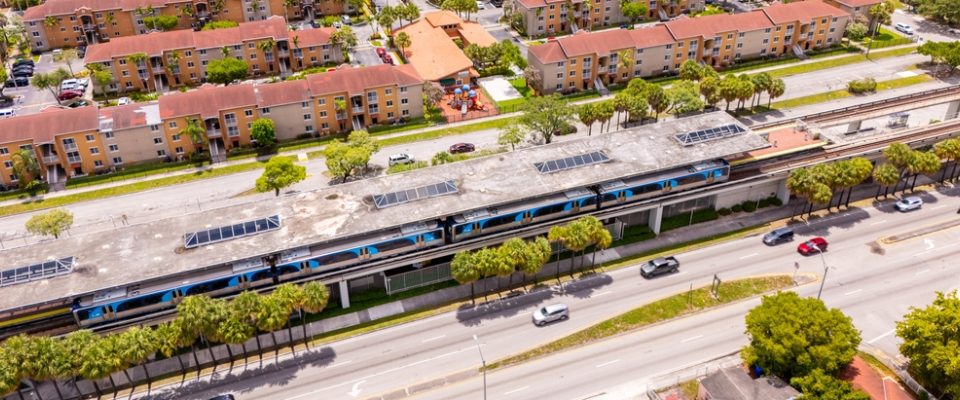
Tri-Rail is a commuter rail line that connects Miami-Dade, Broward and Palm Beach counties along a 72-mile corridor. With 18 stations, including one at Miami International Airport, it offers convenient access across the region.
The service is especially valuable for residents who work across county lines or enjoy exploring South Florida’s diverse communities. Weekend trains also make it easy to reach beaches, attractions and cultural events throughout the area.
Every convenience counts when living in such a tight rental hub. Miami’s public transit may not fully replace using a car, but it provides practical ways to navigate the city and the surrounding areas. From the Metrorail and Metromover to free trolleys and regional rail, the system gives renters options that make renting in Miami easier and less stressful.
Curious about public transit options in other major cities? Explore our guides for renters in Chicago; Washington, D.C.; Seattle; and Philadelphia.
Share this article:


Veronica Grecu
Veronica Grecu is a senior creative writer and research analyst for RentCafe. With more than 14 years of experience in the real estate industry, she covers a variety of topics in the apartment market, including rental competitiveness, new construction and other industry trends. Her work has been featured in top publications like The New York Times, The Washington Post, The Wall Street Journal, The Philadelphia Inquirer, The Miami Herald, CNN, CNBC, and more. Prior to RentCafe, Veronica was involved in producing real estate content for Multi-Housing News, Commercial Property Executive and Yardi Matrix. She holds a B.A. in Applied Modern Languages and an M.A. in Advertising and PR.
Sign up for The Ready Renter newsletter
Get our free apartment hunting guide — plus local insights, trends and research.




Related posts

How do you get around using public transit in Oakland, CA?
Oakland sits at the center of the Bay Area’s transit map, which matters more than almost any other factor when you’re comparing apartments. Trains, buses…
A renter’s guide to public transit in Fort Lauderdale, FL
Fort Lauderdale, FL, is known for its beaches, canals and year-round sunshine, but it also offers renters a surprisingly varied mix of ways to get…

Miami vs. Los Angeles: A cost of living comparison for coast-hopping renters
Thinking about trading Miami’s tropical vibe for life in high-energy Los Angeles? Plenty of renters make the move each year. Miami has long been a…
Subscribe to
The Ready Renter newsletter