
Share this article:


Moving can be a time of uncertainty. Some questions — such as how much storage space you will need while you wait for your home to be built, or to make a cross-country move or take a temporary job overseas — can be answered with a little bit of research. If you are moving your household, a 10’x20′ self storage unit could be a perfect fit if you have a lot of stuff you need to store.
A 10’x20′ storage space has a floor space of 200 square feet and an overall volume of 1,600 cubic feet if the ceiling is eight feet high — slightly narrower than a typical one-car garage. If it is hard to picture what might fit in a space of this size, ask at the storage facility or check with your moving professionals. Experts will tell you that a space of this size — considered large by industry standards — will easily accommodate the contents of a one- or two-bedroom apartment or even a three-bedroom home. A good rule of thumb is five rooms of furniture will likely fit — do the math based on your situation.
Estimating Your Storage Space Needs for Your Upcoming Move
For many people, a move happens once every several years, and storage needs change as families grow or grown-up children move out. If you have been living in a relatively small home, such as a one- or two-bedroom apartment, the following items should fit well in a 10;x20′ storage unit:
- King- or California king-size mattress, headboard and frame
- Sofa and loveseat
- Coffee table and end tables
- Kitchen table and chairs
- Large appliances such as a refrigerator or washer and dryer
- Office desk, chair and filing cabinet
- Dresser
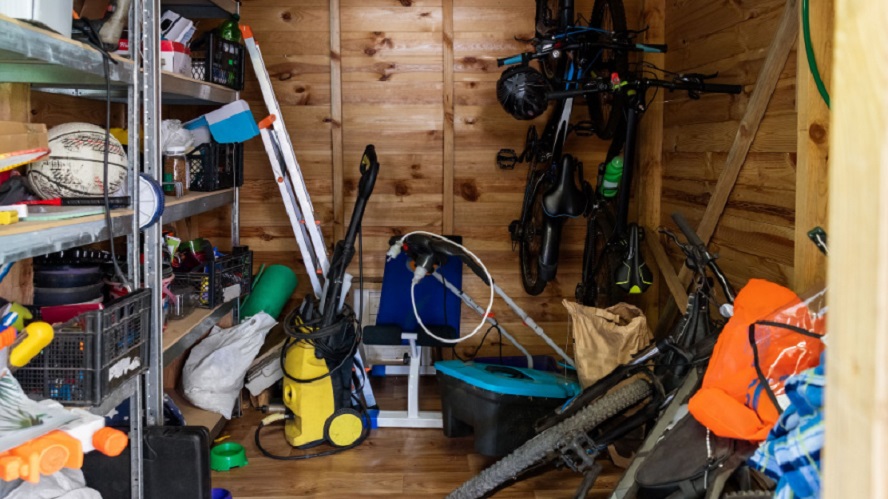
If you have been living in a two- or three-bedroom home, you may have had the added advantage of a yard and a garage to put your things in, and these will need to be included in any move. Here are some of the outdoor extras that a 10’x20′ storage unit will accommodate:
- Patio furniture
- Lawn mower and gardening equipment
- Outdoor grill
- Small car or boat
- Bicycles or motorcycle
- Children’s play equipment such as a scooter, sandbox or trampoline
If you are considering storing a car or boat, measure it to be sure it fits, as some cars and boats will be too large for this size space. Also, these items will take up more space, leaving less room for your furniture and boxes. It could take some additional planning to fit all your belongings, so it will benefit you to sketch out a space plan. Take advantage of the vertical space by stacking lighter items on top of larger, heavier ones.
Give Yourself Plenty of Time to Prepare for Your Move
When moving and placing things in storage, you definitely don’t want to wait until the last minute. Begin your planning with a phone call to storage facilities where you want your stuff stored. They can give you, prior to your move, pricing and other helpful information, such as how to insure your belongings or what security measures are in place at the facility. Storage prices can vary throughout the country and even within an urban area. In California, for example, a non-climate-controlled San Francisco storage unit starts at $191 per month and a storage unit in Sacramento can be as low as $77, while a San Jose storage unit starts at $199. A storage unit in Reno, Nevada, can be as low as $65, and rates for a Brooklyn, New York, storage unit start at $146.
Also, check out prices for renting a moving van or hiring a moving service. A 25-foot van is recommended for a 10’x20′ storage unit. Begin packing boxes early and protecting furniture you won’t be using in the next several days, to get a jump start on moving day. If you are storing a boat or vehicle, check on registration requirements for the state where you are storing it.
We know that moving is stressful. Whether you are downsizing, upsizing, moving cross-country or abroad, getting your storage plans in place will mean you can confidently get on with your move.
Share this article:


Francis Chantree
Francis Chantree is a writer and editor for Yardi, focusing on real estate and lifestyle content. He is a former programmer and researcher who exchanged computer language for his greatest passion, human language! When not writing and proofreading text, he can be found gardening and reading.
Sign up for The Ready Renter newsletter
Get our free apartment hunting guide — plus tips, trends, and research.




Related posts

RentCafe Internet connects you to high-speed WiFi and entertainment services in one place
RentCafe partners with leading internet providers to bring reliable internet, streaming and mobile options directly to renters. Applicants and residents can browse and activate available…
How to break a lease without wrecking your finances or your record
Life changes fast. A new job across the country, a growing family, or an unexpected health situation can all make your current apartment feel like…

From dorm to lease: A step-by-step guide to the first apartment rental process
The first apartment rental process is your transition from shared dorm living to renting a place that’s fully yours. It involves setting a realistic budget,…
Subscribe to
The Ready Renter newsletter