Share this article:


Metro Phoenix is thriving right now in terms of population growth, and has been for about two decades, with both Phoenix and Maricopa County consistently ranking among the country’s fastest-growing cities and counties.
The metro area’s population increased by more than 96,000 people from 2017 to 2018, according to the latest US Census data, reaching a population of more than 4.8 million. People will continue moving here, with the Census Bureau estimating that by 2030 the Phoenix metropolitan area will reach a population of 6.3 million.
It’s no wonder many Americans choose to relocate to Metro Phoenix – the area led the nation in terms of the highest number of jobs created over a year, with about 66,600 new ones added from May 2018 to May 2019, as per the US Bureau of Labor Statistics data.
What does the local housing market look like? It’s not cheap, but it’s definitely less expensive than other places with desirable labor markets like Austin and Seattle. The average monthly apartment rent in Phoenix was $1,119 as of January 2020, according to RentCafe, significantly under the national average of around $1,463. The street rate for a self storage unit in Phoenix stands at $103 for a standard 10X10 one, as per Yardi Matrix data, which is also lower than the national average of $114.
If you’re one of the many Americans considering relocating to the Valley of the Sun, but you are yet to decide, this article will help make up your mind. We gathered some very interesting and less-known facts about Metro Phoenix that will give you a deeper insight into what living here actually entails, what to expect, what to fear and what to enjoy.
1. It’s a desert, but it’s not that dry
Metro Phoenix is located in the Sonoran Desert – but, as far as deserts go, this one is rather attractive. The Sonoran Desert is greener and wetter than most other deserts in North America, receiving between 3 and 15 inches of rain each year. The bi-annual rainfall pattern, which occurs during the winter months and also in July and August, translates into a high biodiversity.
2. Hurting cacti is illegal
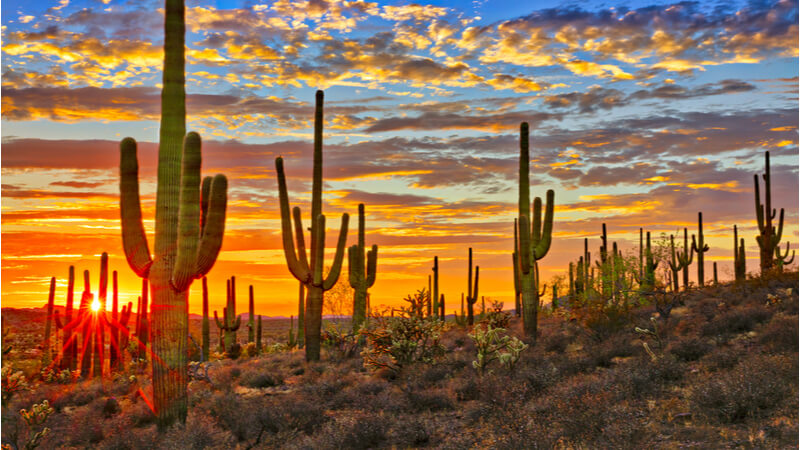
Speaking of deserts, the Sonoran is a native habitat for the spectacular saguaro cactus, which can reach over 40 feet in height and live for over 150 years. This iconic cactus, with its unmistakable silhouette featuring several “arms,” needs up to 100 years to reach maturity. Any damage done to such a cactus will outlast the person who did it. Under such circumstances, it’s easy to understand why the state laws protect the impressive plants. Cutting down, digging up, or mutilating a saguaro, whether on private or public land, will result in felony charges. The maximum sentence a person could get for cutting down a saguaro is 25 years in prison – definitely not the kind of mistake you want to make.
3. Golf is a huge deal in Phoenix
The Greater Phoenix area has more than 200 golf courses, and it also hosts some of the country’s biggest golf tours and events. The PGA Tour Champions’ Charles Schwab Cup usually takes place in early November, while the LPGA Founders Cup is in March. The PGA Tour’s annual Waste Management Phoenix Open is more than a golf tournament – it’s a veritable festival happening at the end of January, with hundreds of thousands of people attending concerts and parties and, obviously, watching golf.
4. Phoenix has teams in all four professional major sports leagues
Phoenix is the place to be if you’re into sports. Not only is the metro area one on the country’s most popular golf destinations, but Phoenix also has franchises in all the major sports leagues. Despite the fact that little natural ice is ever seen here, the Arizona Coyotes compete in the National Hockey League, while the Arizona Diamondbacks represent the city in the Major League Baseball. The aptly named Phoenix Suns play in the National Basketball League and the Arizona Cardinals fight for their home city in the National Football League.
5. Phoenix’s Musical Instrument Museum is the largest of its type in the world
The city’s Musical Instrument Museum opened only 10 years ago but has already managed to become the largest of its kind in the world, with an impressive collection of more than 15,000 musical instruments and other objects related to music, originating from almost 200 countries and territories. Besides hosting instruments that belonged to the likes of Elvis Presley and John Lennon, the museum includes an experience gallery where visitors can touch and play with instruments from many different cultures.
6. The city’s name has a profound meaning
A flourishing culture, known as Hohokam culture, existed for centuries in the area where Phoenix now stands, but it collapsed around the 1400s. When the European settlers arrived, around the 1850s, they discovered vestiges of this ancient civilization, including hundreds of miles of canals and irrigation ditches created to allow crops to grow in the desert. One of the area’s first settlers, Englishman Phillip Darrel Duppa, suggested ‘Phoenix’ as the name for the new outpost, to reflect the fact that a new civilization was rising from the ashes of the old Hohokam one – just like the Phoenix legend. Even today, parts of the city’s 1,000+ miles of concrete canals follow the courses of the old Hohokam irrigation ditches.
7. No daylight-saving time
Do you still need a reason for moving to Phoenix? Well, look no further, as this amazing city ditched the annoying spring forward and fall back clock changes in the 60s and it currently observes Mountain Standard Time (MST) all year round.
8. Basements are not a thing in Phoenix
If you’re a huge fan of basements, then probably Phoenix is not the ideal place for you. The vast majority of the houses in the area do not have basements, due to geological reasons. Phoenix Valley has a soil called caliche, a sedimentary rock that’s almost as tough as cement. In fact, the soil is so hard that you can literally see sparks fly off the shovel, should you try to dig into it.
9. Haboobs can literally blow you away
A haboob is a very large dust storm, a meteorological phenomenon that appears in dry areas. The term “haboob” comes from Sudan, where enormous dust storms are a frequent occurrence, due to its proximity to the Sahara desert. In the 70s, Arizonan meteorologists experienced a dust storm so huge, that they proposed the adoption of the term “haboob” to describe the phenomenon. According to the National Weather Service, Phoenix withstands an average of three haboobs each year, usually from June through September. Such a dust storm can last for hours and may be miles long and several thousand feet high.
10. You’ll be spending a lot of time outdoors
Phoenix enjoys sunlight for about 85% of the time between sunrise and sunset, year-round – which means there will be plenty of opportunities for spending time outdoors. Summer months can be extremely hot, that’s true, but the dry heat in Phoenix is more manageable than humid heat. For the remainder of the year, however, the weather is pretty much perfect, allowing residents to thoroughly explore what the place has to offer in terms of outdoor activities.
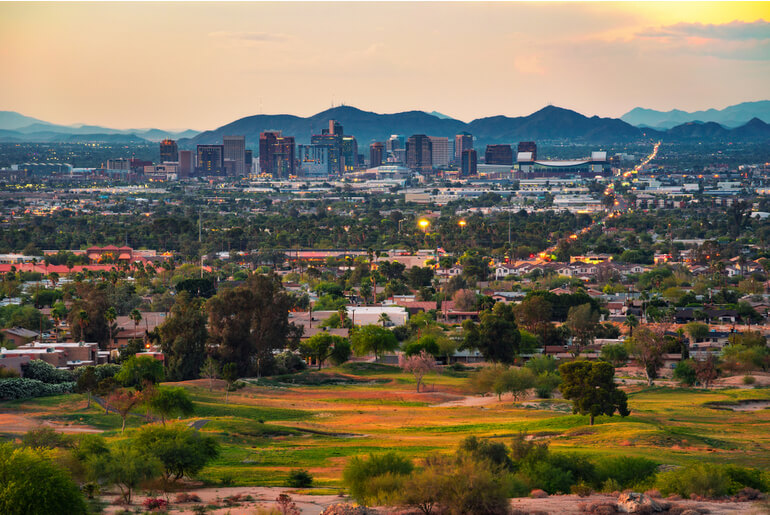
South Mountain Park, which covers more than 16,000 acres, is one of the largest city parks in the US, and it provides almost 60 miles of hiking and biking trails. Another immensely picturesque attraction located about 50 minutes away from downtown Phoenix is the Apache Trail, a scenic 46-mile drive that includes fun stops and activities such as the Goldfield Ghost Town, Lost Dutchmen State Park and the Canyon Lake, with its marina, sandy beaches and campgrounds.
All in all, Phoenix is an economically dynamic city, advantageously located in terms of climate and weather, and with a pretty unique history and heritage. If you’re already a Phoenician and have more interesting and unusual things to add about Phoenix, please let us know in the comments.
Share this article:


Maria Gatea
Maria Gatea is a Senior Editor & Research Writer for Yardi with a background in Journalism and Communication. After covering business and finance-related topics as a freelance writer for 15 years, she is now focusing on researching and writing about the real estate industry. You may contact Maria via email.
Sign up for The Ready Renter newsletter
Get our free apartment hunting guide — plus tips, trends, and research.




Related posts

San Diego vs. Los Angeles: Which city fits your renter budget?
Los Angeles and San Diego share a coastline, a climate and a reputation for expensive rent, but the day-to-day cost of living in each city…
Tempe, AZ on a budget: The most affordable neighborhoods to call home
Tempe is the kind of city where college-town energy meets serious career infrastructure. It’s home to Arizona State University, one of the largest universities in…

Finding an apartment for a new job: How to nail your search on a tight deadline
Landing a new job in a different city is exciting, but it comes with an immediate challenge: where are you going to live? Finding an…
Subscribe to
The Ready Renter newsletter