
Share this article:


Renting your first college apartment is one of the biggest transitions you’ll make as a student. It’s often the first time you’re responsible not just for where you live, but for rent, utilities, rules, and day-to-day decisions that come with managing a home.
That can feel like a lot at once. The good news is that with the right priorities in mind, finding an apartment that fits your budget, schedule, and lifestyle becomes much more manageable.
This guide will walk you through what you should look out for as a first-time renter before signing a lease and moving off campus.
What should you figure out before starting the search for your first college apartment?
Before browsing listings, it’s worth pausing to think through your priorities. Jumping straight into apartment searches without a clear sense of what you need can lead to wasted time and frustration, especially in competitive college rental markets.
Taking a step back helps you filter out options that won’t realistically work and focus on apartments that fit both your lifestyle and your budget.
Start by considering:
-
How much you can afford each month.
This includes rent as well as utilities, internet, transportation and other recurring expenses tied to living off campus. -
How close you need to be to campus.
Commute time can affect your daily routine more than you expect, especially during busy weeks. -
Whether you plan to live alone or with roommates.
This decision influences cost, space needs and the type of apartment that makes sense.
Knowing these basics early makes the rest of the search much smoother and helps you evaluate listings more confidently.

How important is location for a first college apartment?
Location plays a major role in how your first college apartment fits into your daily life. Living off campus doesn’t just mean having a place to sleep — it affects how you get to class, where you run errands and how much time you spend commuting.
When choosing a college apartment, it’s helpful to think beyond the address and focus on how the location supports your routine.
Consider:
-
Walking, biking or public transportation access to campus.
Easy access can save time and reduce stress, especially on busy days. -
Proximity to grocery stores, pharmacies and everyday essentials.
Convenience matters when you’re balancing classes, studying and social life. -
Safety and lighting in the surrounding area.
Feeling comfortable coming home at different times of day is important for peace of mind.
A shorter, simpler commute often means more time for studying, rest or downtime.
What type of housing makes sense for college renters?
College apartments come in many forms, and the best option depends on how you prefer to live and what level of responsibility you’re comfortable with.
Common choices include:
-
Studio or one-bedroom apartments for students who value privacy.
These can work well for renters who prefer quiet or have demanding schedules. -
Shared apartments with roommates to split costs and responsibilities.
Sharing space often makes rent more affordable and can ease the transition off campus. -
Purpose-built student housing with amenities and on-site management.
These communities are designed with students in mind and often offer more structure.
Professionally managed buildings typically handle maintenance and repairs, which can be especially helpful for first-time renters who don’t want to coordinate fixes themselves.

Should you live with roommates?
Many students choose roommates for both financial and social reasons. Sharing a first college apartment can lower costs and make off-campus living feel less isolating.
However, living with others also requires communication and compromise. Before committing, it’s important to talk through expectations.
If you plan to live with roommates, discuss:
-
How rent and utilities will be split.
Clear agreements help prevent tension later. -
Each person’s schedule and study habits.
Differences here can affect noise levels and shared space use. -
Expectations around cleanliness and guests.
Setting boundaries early helps avoid misunderstandings.
Talking through these topics before moving in can prevent many common roommate issues.
What amenities actually matter for college living?
Amenities can be appealing during apartment tours, but not all of them are equally useful for day-to-day college life.
For a first college apartment, it’s best to prioritize features that support your routine, such as:
-
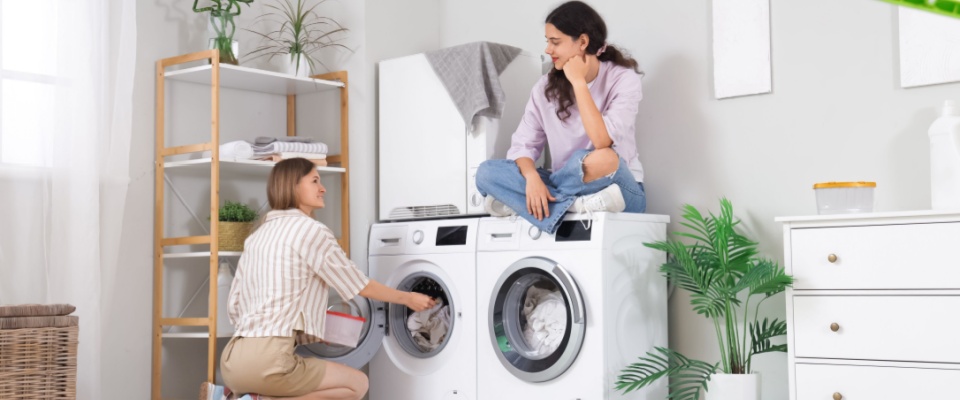
Reliable laundry access.
On-site or in-unit laundry (the #1 must-have amenity for renters) can save time and hassle. -
Secure entry and good lighting.
These features contribute to feeling safe and comfortable. -
Study-friendly spaces or quiet hours.
A calmer environment can make a big difference during exams.
Extras like gyms, lounges or game rooms are nice, but they shouldn’t push the apartment outside your budget.
What should first-time renters look for in a lease?
Your lease sets the rules for your entire time in the apartment, so it deserves careful attention. Many first-time renters skim this step, only to realize later they missed something important.
Before signing, take time to review:
-
Lease length and renewal terms.
Know how long you’re committing and what happens at the end of the lease. -
Which utilities are included in the rent.
This affects your monthly budget more than you might expect. -
Rules around guests, pets and subletting.
These policies shape how flexible your living situation will be. -
How maintenance requests are handled.
Understanding the process helps you address issues quickly.
If something isn’t clear, ask questions before committing. It’s much easier to clarify now than after move-in.
How can you set yourself up for a smooth move-in?
Once you’ve chosen your first college apartment, a little preparation goes a long way toward making move-in day less stressful.
Before move-in day, it helps to:
-
Confirm utilities are set up if needed.
This ensures essentials are ready when you arrive. -
Take photos of the apartment’s condition.
Documenting existing issues protects you later. -
Coordinate shared items with roommates.
This avoids unnecessary duplicates and confusion. -
Pack essentials separately for the first few days.
Easy access to basics makes settling in quicker.
These steps help you feel settled faster and reduce the chances of disputes down the line.

Final thoughts
Your first college apartment doesn’t have to be perfect. It just needs to support your studies, fit your budget, and feel manageable as you adjust to living off campus.
By focusing on location, affordability, layout, and clear lease terms, you can choose a college apartment that helps you stay comfortable and focused throughout the school year and gain confidence as a renter along the way.
Share this article:


Florin Petrut
Florin Petrut is a real estate writer and research analyst with RentCafe, using his experience as a social media specialist and love for storytelling to create insightful reports and studies on the rental market. With a strong interest in the renter experience, he develops data-driven resources that explore cost of living, affordable neighborhoods, and housing trends, helping renters make informed decisions about where and how they live. Florin holds a B.A. in Journalism and an M.A. in Digital Media and Game Studies.
Sign up for The Ready Renter newsletter
Get our free apartment hunting guide — plus renting tips, trends and research.




Related posts

What should renters check about windows before moving into an apartment?
When you’re touring a rental apartment or doing a final walkthrough before signing a lease, it’s easy to focus on the big-picture items: square footage,…

What is a holding deposit? A renter’s simple guide
A holding deposit is money you pay a property manager to take a rental off the market while your application is reviewed. It shows you’re…

Timing your apartment tour: How light, noise and traffic change by the hour
Most apartment tours happen between 10 a.m. and 5 p.m., when leasing offices are staffed and the sun is doing the apartment a favor. The…
Subscribe to
The Ready Renter newsletter