
Share this article:


Most leases in the U.S. end between May and September, which means most renters move during the hottest months of the year. If you’re moving with pets, that timing is especially important.
Dogs and cats can’t cool down the way people do, and the busiest day of your year is also one of the riskiest days of theirs. Add a heatwave and a propped-open front door, and small oversights turn serious fast. With a little planning, though, moving with pets in summer is much more manageable.
Here’s how to prepare your pet, when to travel, how to stay cool on moving day and what to do once you reach your new apartment.
Key takeaways:
- Move pets during the early morning, the coolest part of the day.
- Pets should ride in an air-conditioned car, never in the cargo area of a moving truck.
- A parked car can hit 104°F within 10 minutes on an 85°F day.
- Update ID tags and microchip info before moving day, when escapes spike.
- Heavy panting, drooling and wobbliness signal heat stroke. Cool your pet down and call a vet fast.
Why is moving with pets riskier in summer?
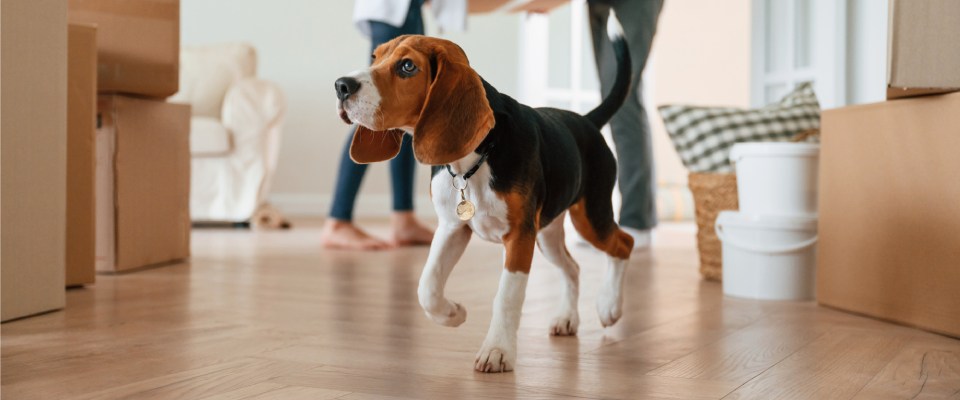
Dogs and cats release heat mainly by panting because they only sweat through their paw pads. A dog’s normal body temperature runs between 100°F and 102.5°F, and heat stroke can begin past 104°F. That’s a narrow margin on a 95°F day, especially for a stressed pet that pants more and drinks less.
Pavement adds another hazard: asphalt can reach 125°F when the air is only 77°F, which is hot enough to burn paw pads. If you can’t hold the back of your hand on it for seven seconds, it’s too hot for paws.
Some pets need extra care when moving with pets during summer heat:
- Flat-faced breeds like pugs, bulldogs and Persian cats, which can’t pant efficiently
- Seniors, puppies, kittens and overweight pets, whose bodies regulate heat poorly
- Small pets such as rabbits and guinea pigs, which can overheat once temperatures pass 80°F
How do you prepare pets before a summer move?
A week of prep makes moving with pets far less stressful. Here’s how to prepare:
- Visit the vet. Get copies of records, refill medications and ask about options for motion sickness or travel anxiety.
- Update ID tags and microchip details with your new address and phone number, since more pets go missing during moves than almost any other time.
- Confirm the pet policy at your new apartment. Ask about breed or weight rules, pet screening, pet deposits and monthly pet rent. Still searching? Filter for pet-friendly apartments on RentCafe to skip the guesswork.
- Pack a pet travel kit: Include water, a collapsible bowl, a frozen water bottle, a towel, leash, waste bags or a small litter box, food and a familiar toy.
- Keep routines steady. Feed and walk your pet at the usual times during packing week.
What’s the safest way to travel with pets during a heatwave?
Timing is your best tool when moving with pets during a heatwave. Load the car before sunrise if you can. The coolest hours fall between 4 a.m. and 8 a.m. A few non-negotiables for the drive:
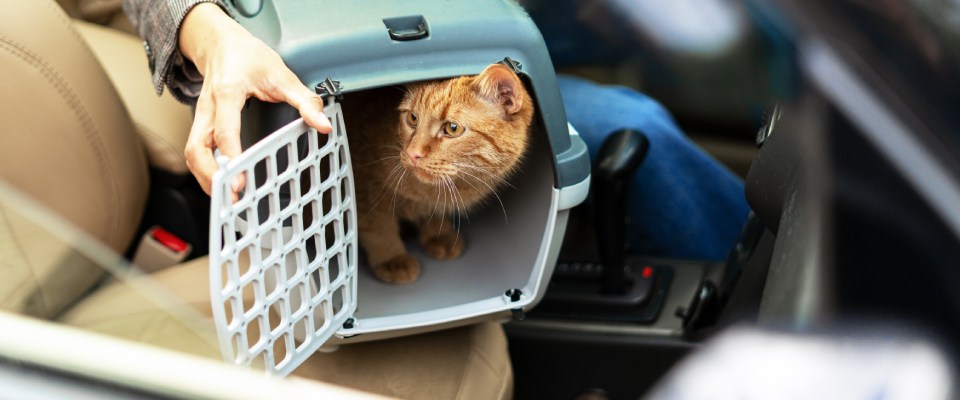
- Pets ride in the car with you, secured in a crate or with a pet seat belt, with the air conditioning on. The cargo area of a moving truck has no ventilation and can quickly become deadly.
- Offer water at every stop, ideally every hour or two, and park in the shade.
- Feed a light meal three to four hours before leaving to reduce nausea.
- For long-distance moves, book pet-friendly hotels ahead and drive your longest stretches in the morning.
Most importantly, you should never leave a pet in a parked car, even with the windows cracked. Data from the American Veterinary Medical Association shows why:
| Outside temperature | Inside the car after 10 minutes | Inside after 30 minutes |
|---|---|---|
| 75°F | 94°F | 109°F |
| 85°F | 104°F | 119°F |
| 95°F | 114°F | 129°F |
How do you keep pets cool on moving day?
Moving day means propped-open doors, strangers in the hallway and boxes everywhere, a perfect storm for escapes and overheating. The easiest fix is leaving your pet at a friend’s place, with a pet sitter or at a day of doggy daycare. That keeps your pet cool while you handle the chaos.
If your pet stays with you, set up a safe room:
- Choose a quiet room with air conditioning or a fan and close the door.
- Add water, bedding, a litter box for cats and a familiar item that smells like you.
- Tape a sign to the door: “Pet inside — please keep closed.”
- Check in every hour, but don’t be surprised if your cat hides.
- Walk dogs before sunrise, stick to grass instead of asphalt and save play sessions for after dark.
What are the signs of heat stroke in pets?
Heat stroke can become life-threatening in minutes, so knowing the warning signs is part of moving with pets safely. Watch for:
- Heavy, rapid panting that doesn’t slow down with rest
- Thick drool or excessive salivation
- Bright red or pale gums and a dry tongue
- Vomiting or diarrhea
- Wobbly walking, glassy eyes, lethargy or collapse
If you spot these, move your pet into shade or air conditioning, pour cool (not ice-cold) water over their body and offer small sips. Then call the nearest vet. Even if they seem to recover, internal damage can show up later.
How do you help pets settle into a new apartment?
Arrival day is when moving with pets gets easier. Before unpacking the boxes, set up your pet’s corner — bed, bowls, toys and litter box — in a cool, quiet room with the air conditioning already running.
Let them explore gradually: dogs usually adjust within a few days, while cats may hide for a week or more. Keep feeding and walking times consistent, check that window screens are secure and save the nearest emergency vet’s number before you need it.
FAQ
A: Risk rises sharply above 85°F, and flat-faced breeds, seniors and small pets can struggle even in the low 80s. If you can’t reschedule, move your pet in the early morning and keep them in air conditioning afterward.
A: No. The cargo area of a moving truck has no ventilation or temperature control, and interior temperatures can far exceed the outside air. Pets should always travel in the cab or in a separate air-conditioned car.
A: Most dogs settle in within a few days to a week, while cats often need two to four weeks. Consistent routines, familiar items and a quiet space of their own speed things up.
Share this article:


Florin Petrut
Florin Petrut is a real estate writer and research analyst with RentCafe, using his experience as a social media specialist and love for storytelling to create insightful reports and studies on the rental market. With a strong interest in the renter experience, he develops data-driven resources that explore cost of living, affordable neighborhoods, and housing trends, helping renters make informed decisions about where and how they live. Florin holds a B.A. in Journalism and an M.A. in Digital Media and Game Studies.
Sign up for The Ready Renter newsletter
Get our free apartment hunting guide — plus moving tips, trends and research.




Related posts

Moving with pets during peak summer heat: What every renter should know
Most leases in the U.S. end between May and September, which means most renters move during the hottest months of the year. If you’re moving…

14 things renters should photograph on move-in day
Moving into a new apartment can sometimes get stressful, as it comes with plenty of things to do: turning on utilities, submitting a change-of-address form,…

9 Tips to prevent your dog from barking in the apartment
If you’re trying to prevent barking, it helps to first understand why dogs do it. Barking is normal and often useful — dogs use it…
Subscribe to
The Ready Renter newsletter