Millionaire renters more than triple in 5 years, nearly half are Millennials
Share this article:


The number of millionaire renter households in the U.S. grew 229% between 2020 and 2024, more than tripling in just five years. While New York City, San Francisco and Los Angeles still pull the affluent crowd, a fresh crop of markets is emerging where none existed before.
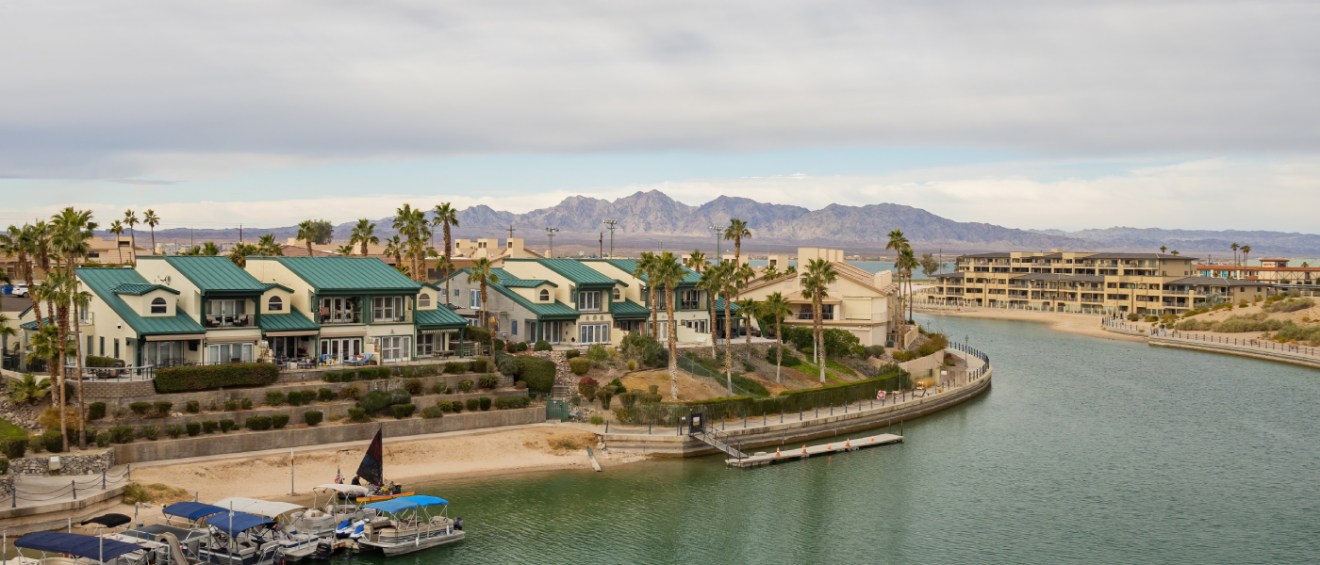
Leading the way is Lake Havasu City, AZ, which had no millionaire renter households in 2020, but has since become an unexpected destination for wealthy renters.
That 229% increase outpaced millionaire homeowners, who grew 193% during the same period. And, because affluent Americans have long favored owning, the faster climb in renting marks a shift in housing preferences.
Key takeaways:
- Millionaire renters more than tripled between 2020 and 2024, rising 229% and outpacing millionaire homeowners at 193%.
- Nearly half of millionaire renters are Millennials, but Gen Z has posted the fastest surge in millionaire renters, with their numbers increasing 46-fold since 2020.
- Houston leads the nation in millionaire renter growth, while Lake Havasu City, AZ, and Charleston, SC, went from zero to hundreds of renter households.
- New York City, San Francisco and Los Angeles remain the top hotspots for millionaire renters, whereas affluent homeowners are increasingly buying in smaller inland metros, like Harrisburg, PA; Provo, UT; and Des Moines, IA.
The numbers paint a compelling picture of growth, but who are these affluent renters? By household income, the segment looks strong: In total, there were 18,400 millionaire renter households in 2024. A closer look at individuals earning more than $1 million, though, tells a different story, as just 4,462 renters clear that bar on their own. That means that individual seven-figure earners account for roughly one in four millionaire renter households at most.
The remaining three-quarters are driven by combined household income — typically two high-earners whose salaries together cross the million-dollar line.
So, what’s driving this shift? For a growing number of millionaires, renting is now a deliberate choice. That's because many prioritize mobility without the commitment of owning a home, as well as the ability to relocate without going through the lengthy process of selling a multi-million-dollar house.
The pandemic accelerated the shift as remote work pushed the wealthy to relocate to lower-tax metros like Houston, where millionaire renters grew 13-fold, versus 3.9-fold for owners. At the same time, booming AI-sector wealth has minted new high-earners, many of whom are choosing to rent.
There’s a financial logic at work, too. Rather than tying up capital in real estate, many affluent renters prefer to keep their money liquid and invest in a stock market that’s posted strong gains.
Where are today’s millionaires renting and buying?
While traditional strongholds like New York City, San Francisco and Los Angeles — where renting is often the more practical option — still draw plenty of affluent residents, Southern metros are increasingly staking their claim.
Nowhere is that clearer than in Texas and Florida, where sunshine and a lack of income tax are luring millionaires in growing numbers. Specifically, Houston’s millionaire renters grew 13-fold, from just 18 in 2020 to 232 in 2024 — a remarkable 1,189% surge. Granted, 232 households is still a tiny fraction of the Houston metro’s roughly 2.7 million households, but the growth rate far outpaces any other major metro.
Much of Houston’s surge is fueled by affluent newcomers — including executives, professional athletes and entertainers — who often choose to rent before buying.
Fastest-growing hotspots for millionaire renters and homeowners
Growth in millionaire households by metro, 2020–2024

Naples, FL, follows at 986%, surging 11-fold from seven millionaire renters to 76. Miami rounds out the top three with affluent renters increasing 11 times, rising from 51 to 538 for a 955% gain during those five years.
Beyond these hotspots, millionaire renters and homeowners are also putting down roots in markets that had only a few — or even no — high-net-worth households just a few years ago. Among the newest destinations for affluent renters is Lake Havasu City, AZ, which had zero millionaire renter households in 2020, but has more than 200 today.
| Ranking | Metro area | No. of households 2020 | No. of households 2024 | Growth factor | Percentage increase |
|---|
On the homeownership side, Harrisburg, PA, stands out. Here, the number of millionaire homeowner households soared from just three in 2020 to 141 in 2024, driven by the area's relative affordability; an increase in Pennsylvania's millionaire population; and Harrisburg’s strong base of government, health care and insurance jobs.
Half of millionaire renters are Millennials, but wealthy Gen Z renters are rising the fastest
Millennials and Gen X are driving the growth in millionaire households, but Gen Z is making the biggest gains. Between 2020 and 2024, affluent Americans across all three generations became more likely to rent or own homes, with younger millionaires entering the market at a particularly rapid pace.
Nearly half (49%) of millionaire renters are Millennials, and the number of affluent Millennial renter households surged 392% during the five-year period. Gen X follows with 33% of millionaire Gen X households renting after increasing by 147%.
Although Gen Z still represents a small share of millionaire renters (just 2% of the total), no generation has expanded faster: Gen Z millionaire renter households leaped from fewer than a dozen to more than 400 — a tiny cohort today, but one that was virtually nonexistent five years ago.

The jump in Gen Z millionaire renters looks dramatic, but it makes sense given the timeline. This generation was barely entering the workforce in 2020. By 2024, the oldest Gen Zers were approaching 30, and many who struck it big early — through the creator economy, crypto or startup equity — were choosing to rent precisely because their wealth isn't tied to a traditional career ladder. With no employer anchoring them to one place, they have little reason to put down roots.
The picture looks different for homeownership. In 2020, Baby Boomers accounted for the largest share of millionaire homeowners at 47%. However, by 2024, Gen X had overtaken them to become the largest generation of millionaire homeowners with a 45% share.
Millennials also continued to gain ground as more affluent households transitioned into homeownership.
Gen Z tells a more nuanced story. Although the number of millionaire Gen Z homeowners increased by 27% during those five years, their share of all millionaire homeowners fell from 1% to 0.5% as older, wealthier generations expanded even faster.
What do most millionaire renters do for a living?
Most of today’s millionaire renters work in white-collar, high-earning fields, like chief executives, tech professionals and top financial managers. These roles tend to generate steady, substantial income without necessarily tying workers to one location, making renting a practical fit, rather than a financial necessity.
But, perhaps the most surprising entries on the list are high-earning professors and operations managers — a sign that the millionaire renter isn’t always who you’d expect.
Where millionaires are headed next: Markets that had 0 just 5 years ago
As affluent renters increasingly venture beyond the usual luxury strongholds, a whole new group of millionaire hotspots is emerging. These are markets that had no millionaire renter households in 2020 and are now drawing high-earners fast. Leading the way is Lake Havasu City, AZ, where the number of millionaire renter households jumped from zero in 2020 to 226 in 2024.
What’s fueling the surge? Lake Havasu City’s climb mirrors a larger wave of affluent Californians chasing lower taxes, a more affordable cost of living and an easier-going lifestyle — but without sacrificing access to high-end housing. Here again, the pandemic kicked off the trend, and it hasn’t slowed since, turning this lakeside Arizona city into an unlikely home base for millionaire renters.
| Ranking | Metro area | Millionaire renter households 2024 |
|---|
Next up is the Charleston, SC, metro area, where the number of millionaire renters grew from zero in 2020 to 217 in 2024. Already one of the best cities for renters overall, Charleston reflects a bigger trend of high-earners trading established luxury markets for rising Southern metros that offer plenty of tech jobs and an appealing lifestyle. Stock market gains, new AI wealth and the staying power of remote work are all driving the shift by enabling affluent renters to live somewhere more affordable without putting their careers on hold.
In a distant third is Oxnard, CA, where the number of millionaire renter households grew from zero to 92 between 2020 and 2024. Much of that growth came from affluent Angelenos seeking a coastal lifestyle without Los Angeles’ sky-high housing costs, combined with the flexibility of remote work, which has made it easier for high-earners to live farther from the office.
Coastal giants still reign: New York City, San Francisco & Los Angeles are top hotspots for millionaire renters
Even as millionaire renters increase, these high-earners continue to concentrate along the coasts — and the familiar heavyweights still dominate.
Leading the way is the New York City metro area, which has been the nation’s favorite address for the wealthy for years. Its millionaire renter households jumped from 2,730 in 2020 to 7,296 in 2024 — a 167% gain in five years.
millionaire renters
| Ranking | Metro area | Millionaire renter households 2024 |
|---|
Much of the millionaire energy, however, is flowing from California. San Francisco ranks second nationwide with 1,863 wealthy renter households in 2024, up from 499 in 2020 for a 273% jump. Further south, Los Angeles saw an even steeper climb with high-income renter households multiplying more than sevenfold (up 609%) from just 216 in 2020 to 1,532 in 2024. Likewise, in San Jose, millionaire renters more than tripled in the same period (up 215%), rising from 284 households to 895.
On the opposite coast, Miami rounds out the top five, and its surge is hard to miss. The metro’s millionaire renters grew roughly 11-fold (up 955%), climbing from a mere 51 households to 538 in five years. Beyond the tax perks and warm weather, Miami’s rise as a fintech hub has pulled in executives and entrepreneurs relocating for work, many of whom choose to rent while putting down roots in a new professional scene.
Living big in smaller locations: Millionaire homeowners are venturing beyond traditional wealth hubs
Where affluent Americans choose to buy homes isn't always where you’d expect. In fact, more and more are skipping the coastal heavyweights in favor of smaller, inland metros with strong local economies and a high quality of life — and the gains in these places have been striking.
Topping the list is government-anchored Harrisburg, PA, which has become the country’s leading pick for affluent homeowners. Its numbers grew 47-fold in five years, rising from just three households in 2020 to 141 in 2024 — emerging essentially from scratch.
| Ranking | Metro area | No. of households 2020 | No. of households 2024 | Growth factor | Percentage increase |
|---|
Provo, UT, follows close behind with millionaire homeowners growing from a mere 10 in 2020 to 264 in 2024. As the anchor of Utah’s "Silicon Slopes" tech corridor, Provo has lured major employers and startups whose stock options, equity and paychecks turn directly into buying power.
Des Moines, IA, also stands out with millionaire homeowner households increasing from just four in 2020 to 92 in 2024. A longtime hub for insurance and financial services, the metro has steadily built wealth through a deep pool of high-earning professionals, unlike coastal markets that are fueled by tech booms.
Classic wealth hubs are magnets for millionaire homeowners
Some millionaires may be branching out in search of fresh places to call home, but the traditional luxury hubs are hardly fading into the background. Yet, while New York City, Los Angeles and San Francisco continue to pull in wealthy homeowners by the thousands — and a look beyond them shows other long-established markets quietly enjoying a surge of their own.
Boston is a prime example. Here, millionaire homeowners more than tripled across five years after jumping from 2,586 in 2020 to 8,420 in 2024. Behind that climb is a local economy firing on all cylinders, anchored in high-wage industries like biotech and finance and with home values appreciating faster than the national average.
| Ranking | Metro area | Millionaire homeowner households 2024 |
|---|
Washington, D.C., paints a similar picture. Its millionaire homeowners have doubled during the same period after going from 4,193 in 2020 to 8,328 in 2024. Here again, the growth was driven by a fast-rising count of homes topping the million-dollar mark, backed by a strong economy that leans on a mix of high-paying federal, tech and professional services jobs.
FAQ
A: Millionaire renter households grew faster, increasing 229% between 2020 and 2024, compared with 193% for millionaire homeowner households.
A: Millennials, who make up 49% of all high-income renters, are most likely to rent as millionaires, though Gen Z is the fastest-growing segment.
A: New York City, San Francisco, Los Angeles and Miami have the highest concentrations of millionaire renters.
A: Houston; Naples, FL; and Miami lead, with Houston up 13-fold in five years. Strong job markets, no state income tax and an influx of affluent transplants are fueling the surge in these Sun Belt metros.
A: Lake Havasu City, AZ; Charleston, SC; and Oxnard, CA, all went from zero millionaire renters in 2020 to sizable numbers by 2024.
A: Millionaire renters do mostly white-collar work, like chief executives, tech professionals and financial managers, plus a few surprises, like professors and operations managers. Many of these careers demand flexibility or relocation, making renting a practical fit.
Methodology
RentCafe.com is a nationwide apartment search website that enables renters to easily find apartments and houses for rent throughout the United States.
We consider "millionaire renters" or "millionaire owners" individuals from households that have a total annual household income of $1 million or more and who are renting or own an apartment or a house. The analysis compares the latest data (2020-2024 American Community Survey 5-year estimates) with the previous period (2016-2020 ACS 5-year estimates). Income figures are nominal and not adjusted for inflation.
Generation brackets were defined as per Pew Research Center data.
IPUMS means Integrated Public Use Microdata Series and provides census and survey data from around the world integrated across time and space. IPUMS is a part of the Institute for Social Research and Data Innovation at the University of Minnesota. IPUMS USA, University of Minnesota, www.ipums.org
Steven Ruggles, Sarah Flood, Matthew Sobek, Daniel Backman, Grace Cooper, Julia A. Rivera Drew, Stephanie Richards, Renae Rodgers, Jonathan Schroeder, and Kari C.W. Williams. IPUMS USA: Version 16.0 [dataset]. Minneapolis, MN: IPUMS, 2025. https://doi.org/10.18128/D010.V16.0
Fair use and redistribution
We encourage you and freely grant you permission to reuse, host, or repost the research, graphics, and images presented in this article. When doing so, we ask that you credit our research by linking to RentCafe.com or this page, so that your readers can learn more about this project, the research behind it and its methodology. For more in-depth, customized data, please contact us at media@rentcafe.com.
Share this article:


Veronica Grecu
Veronica Grecu is a senior creative writer and research analyst for RentCafe. With more than 14 years of experience in the real estate industry, she covers a variety of topics in the apartment market, including rental competitiveness, new construction and other industry trends. Her work has been featured in top publications like The New York Times, The Washington Post, The Wall Street Journal, The Philadelphia Inquirer, The Miami Herald, CNN, CNBC, and more. Prior to RentCafe, Veronica was involved in producing real estate content for Multi-Housing News, Commercial Property Executive and Yardi Matrix. She holds a B.A. in Applied Modern Languages and an M.A. in Advertising and PR.
Sign up for The Ready Renter newsletter
Get our free apartment hunting guide — plus tips, trends and research.




Related posts
Millionaire renters more than triple in 5 years, nearly half are Millennials
The number of millionaire renter households in the U.S. grew 229% between 2020 and 2024, more than tripling in just five years. While New York…
Detroit vs Chicago: Which Midwest city is more affordable for renters?
Detroit and Chicago are about 280 miles apart, making a move between the two a realistic option for many Midwestern renters. Maybe you’ve landed a…
Public transit options for renters in Newark, NJ: How to get around without a car
Newark renters can live car-free using PATH, NJ Transit rail, the Newark Light Rail and an extensive bus network, with Manhattan reachable in about 20…
Subscribe to
The Ready Renter newsletter