
Share this article:


Renting a self storage unit can help with a host of situations, such as bringing order to a cluttered home, moving, downsizing and more. But with so many reasons to use self storage, it’s all too easy for your unit to become cluttered, even if you’ve got a large 10’x30’ unit. A superb choice for vehicle storage and packing up a large family home, this two-car garage-sized unit really can hold a lot of stuff.
With such a lot of space, things can soon become disorganized though. So, before you start moving your belongings into your storage unit, be sure to plan ahead. Fortunately, we have several tips and tricks to help you keep your storage unit organized and safe.
Make a Plan Before You Start Packing
Planning ahead not only keeps your unit organized, but it can also save you money. First of all, see what fits inside a 10’x30’ unit to make sure that you really need this unit size. Once you’ve decided, shop around, as prices can vary between different facilities. For example, on average you can expect to pay $316/per month for a 10’x30’ unit in Denver, Colorado, while in nearby Colorado Springs, Colorado, that drops to $235/month. In Phoenix, Arizona, you can expect to pay somewhere in the middle, around $272/month on average.
In other parts of the country, like Austin, Texas or Los Angeles, California, it might be worth spending a little more for a climate-controlled unit, which cost $352/month and $648/month, respectively. In these humid climates, the extra cost can be well worth it if you’re storing items that are sensitive to humidity, such as furniture, clothing, appliances, musical instruments, documents, and collectibles.
Once you’ve chosen your unit, make sure you know the measurements of the door, and double-check the ceiling height. This way, you can be sure that all your belongings will actually fit through the door and that there’s enough room for them inside the unit. Finally, prepare a list of everything you want to put into storage and note their dimensions.
Get Ready for Your Move
In the run-up to moving day, start packing your items up. For smaller things, use sturdy boxes and bubble wrap to keep fragile items safe during transit. Label all of your boxes, with a detailed list of what’s inside — this will be a big help later on when you want to retrieve something.
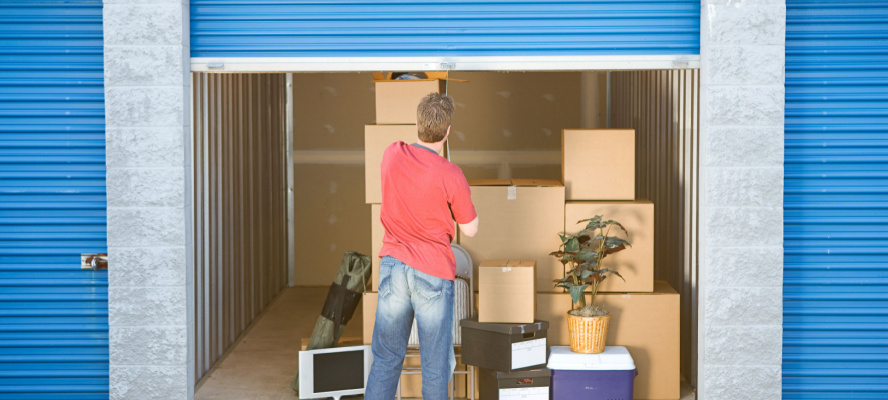
Next, look over your list, and make a sketch or map of how all your belongings will fit together in your unit. Consider buying and installing a couple of shelving units. They can be a great help for storing boxes and smaller items and allow you to make the most of the wall and vertical space. For everything else, keep heavy, sturdy items at the bottom and stack lighter pieces on top.
Remember the basics of packing a 10’x30’ unit
Here are some packing basics for your 10’x30’ unit to consider to have an organized storage space:
- You can fit the contents of a five-bedroom single-family home in this type of unit. Just remember to lay mattresses flat and don’t store heavier items on top. Ideally, they should be at the top of a stack.
- Disassemble larger pieces of furniture for long-term storage. Put the hardware and smaller pieces, and tape this to the larger pieces.
- Save space by rolling or vacuum sealing bulky clothes.
- Store sturdy tables and desks on the ground standing up, and store lighter items on top.
- If you’re storing a vehicle, make use of the inside space for storing boxes and bags that can easily be removed when you need to use the vehicle.
When you’ve prepared your sketch or map, figure out what order everything needs to go into the moving van. Heavier items that will stand on the floor should be the last in and the first out to speed up the moving process.
Organizing Your Storage Space on Moving Day
Hiring a team of professional movers can be a great way to speed up the process of moving your belongings into storage and reduce the risk of breakages. Using your plan, load up the truck to ensure the heavy items will be the first to come out, and the lighter, stackable ones will be last.
As you fill up your storage space, don’t forget to leave room to access all stored items maneuver. You’ll want to create a walkway that enables you to easily get from the front to the back of your unit. Also, ensure there are clear paths to any shelving units. Make sure the labels on your boxes are all visible as you stack them, and keep anything you need regularly close to the front and easy to access.
Once everything is in, print out an inventory or checklist, and stick it on the door before you leave.
Share this article:


Mirela Mohan
Mirela is a senior real estate & proptech editor at Yardi, covering property management technology, proptech and the growing role of AI across the built environment for Yardi.com. Outside of work, Mirela enjoys reading, hiking and creating art. You can contact Mirela via email.
Sign up for The Ready Renter newsletter
Get our free apartment hunting guide — plus tips, trends, and research.




Related posts

Philadelphia, PA vs. Atlanta, GA: Cost of living comparison for renters (2026)
Weighing a move from Philadelphia to Atlanta or the other way around? Both cities have a lot to offer renters. Philadelphia is a draw for…

Best cities for renters to live in 2026: McKinney, TX, leads again in a South-dominated top 50
For the second year in a row, McKinney, TX, holds the top spot in RentCafe.com’s ranking of the best cities for renters. This year, Southern…

Timing your apartment tour: How light, noise and traffic change by the hour
Most apartment tours happen between 10 a.m. and 5 p.m., when leasing offices are staffed and the sun is doing the apartment a favor. The…
Subscribe to
The Ready Renter newsletter