History in Motion: See How the Austin Skyline Changed over the Past 130 Years (Video)
Share this article:


Two decades shy of 200 years, the Texas state capital transformed from a settlement of fewer than 1,000 residents to the fastest-growing metropolis in the country. Austin’s attractive weirdness dwells in its contrasts. The city is at once home to some of the most charming historical residential architecture and to modern resort-style living, ranks among the most sustainably-minded urban communities, and is the number one U.S. city for tech startups.
In 2015, we tracked Austin’s most recent construction boom, displaying the city’s new vertical landscape in 10 before-and-after sliding images. This year, our sister website COMMERCIALCafe included the live music capital of the world in its skyline evolution series. The video below shows the rise of Downtown Austin, tracking the construction of buildings at least 200 feet tall, complete with local trivia.
The State Capitol Building was completed in 1888, towering 311 feet above Austin. It opened as the seventh largest building in the world, and still rises 14 feet higher than the National Capitol in Washington D.C. A local ordinance enacted in the early 1930s imposed a city-wide building height limit of 200 feet, and no structure rose higher than the Goddess of Liberty for nearly a century. The first tower to break with the norm was built on West Sixth street in 1974. Rising 335 feet and covered in 3,600 insulated reflective glass panes, which contained a small amount of gold alloy, the “Golden Mirror” was refurbished in the 1980s and is now known as the Chase Bank Tower.
The building boom of the 1980s produced 13 new high rises, mostly on and around Congress Avenue and the Capitol building. Moody Bank Tower, which houses a 12-foot-long table made from a 211-year-old fallen pecan tree in its main conference room, and One American Center, the first Austin building to exceed 400 feet in height, to name a few. Skyscrapers had truly arrived, and the last three projects to be completed downtown that decade all towered above 300 feet: San Jacinto Center (311 feet), 100 Congress Avenue (320 feet), and One Eleven Congress (417 feet).
In 2004, the Frost Bank Tower opened as the tallest in town, first to top 500 feet in height. That same year, the city officially included downtown’s Rainey Street in the central business district zone. A flurry of high-rise hotels and residential towers followed – the Hilton Austin, the 360, Spring, the Monarch, the Ashton, Four Seasons Residences, Gables Park Tower, the Bowie, Windsor on the Lake. The Austonian, completed in 2010, rises 683 feet up and remained unchallenged until last year, when the cantilevered Independent took the crown of Austin’s tallest building, topping out at 688 feet.
View the full COMMERCIALCafe article here.
Share this article:


RentCafe Editors
The RentCafe Editors are a team of real estate writers, researchers and analysts committed to making the rental journey easier for millions of renters. From in-depth market reports and data-driven studies to practical tips for apartment searching and living, they deliver trusted, timely content you can count on.
Sign up for The Ready Renter newsletter
Get our free apartment hunting guide — plus local insights, trends and research.




Related posts
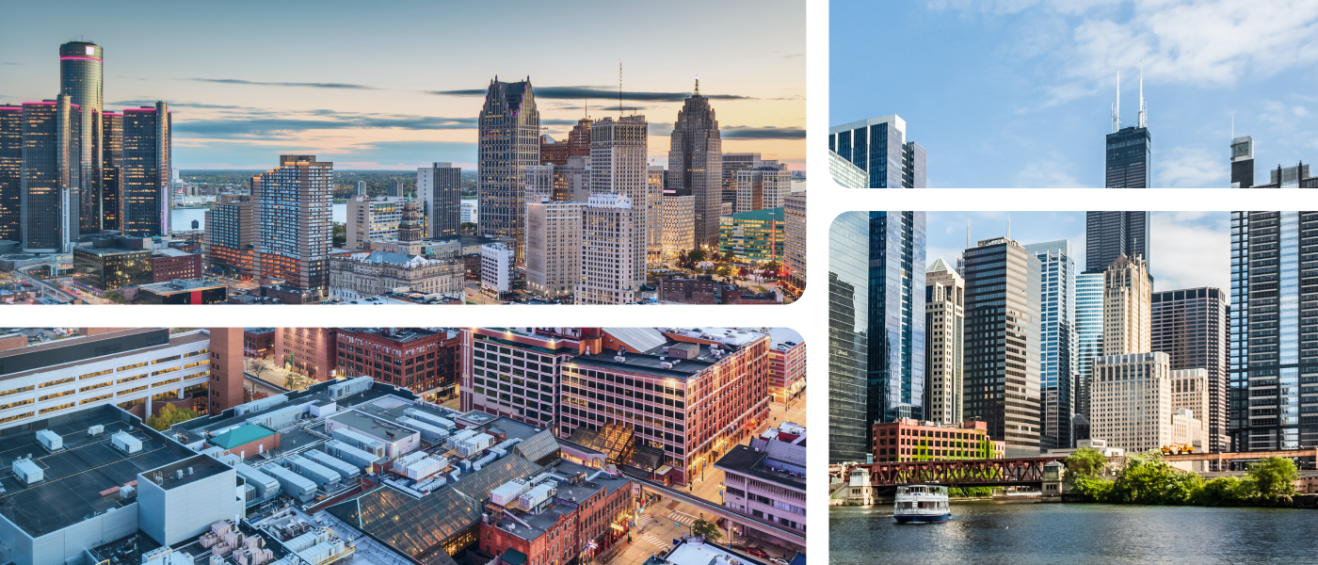
Detroit vs Chicago: Which Midwest city is more affordable for renters?
Detroit and Chicago are about 280 miles apart, making a move between the two a realistic option for many Midwestern renters. Maybe you’ve landed a…
Public transit options for renters in Newark, NJ: How to get around without a car
Newark renters can live car-free using PATH, NJ Transit rail, the Newark Light Rail and an extensive bus network, with Manhattan reachable in about 20…
Touring apartments in Aurora, IL? Ask these five questions first
Aurora is the second-largest city in Illinois, and it’s carried the nickname City of Lights since the 1880s when it became one of the first…
Subscribe to
The Ready Renter newsletter