Share this article:


As one of the most public-transit-friendly cities in the Intermountain West, Salt Lake City makes it genuinely realistic to get around without a car. Renters have access to three light rail lines, a regional commuter train, a wide bus network and a downtown bike share. The best part is that they’re all coordinated by the same agency with a single fare card.
The result is lower transportation costs, fewer parking hassles and a calmer commute. That’s why it’s worth understanding your transit options before you sign a lease on an apartment in Salt Lake City.
Here are the top Salt Lake City public transport options for a car-free renter lifestyle:
- TRAX Light Rail
- FrontRunner Commuter Rail
- UTA Bus Network
- S-Line Streetcar
- UTA On Demand microtransit
- GREENbike bike share
- UTA Ski Service
Salt Lake City sits on a famously easy-to-read grid, hemmed in by the Wasatch Mountains to the east and the Great Salt Lake to the west. That linear north-south shape is exactly why rail and bus service work so well here. Most of the region’s jobs, schools and entertainment options cluster along a handful of well-connected corridors.
This guide walks through each mode, who it serves best and how it should shape your apartment search across the Wasatch Front.
Quick rundown of Salt Lake City public transit
TRAX Light Rail
TRAX is the option most Salt Lake City renters rely on first. The system is operated by the Utah Transit Authority (UTA) and runs three color-coded lines, Blue, Red and Green, that cover roughly 45 miles of track across the Salt Lake Valley.
If you work in Downtown Salt Lake City, study at the University of Utah or fly frequently for work, TRAX is likely your strongest commuting option. The Red Line runs straight to the University of Utah campus, the Green Line connects downtown to Salt Lake City International Airport and the Blue Line extends south to Sandy and Draper.
When you’re apartment hunting in Salt Lake City, pay close attention to how far an apartment is from the nearest TRAX station. That distance will shape your daily routine more than almost any other single factor.
FrontRunner Commuter Rail
As the regional rail spine of the Wasatch Front, FrontRunner is the next layer of public transit in Salt Lake City beyond TRAX. Also run by UTA, it stretches roughly 90 miles from Ogden in the north through Salt Lake Central Station and down to Provo, with stops in Murray, South Jordan, Lehi and several other suburbs along the way.
For renters working in tech corridors like Lehi’s Silicon Slopes or commuting in from northern Utah, FrontRunner replaces a stressful I-15 drive sitting in commuter traffic with a calmer hour to read or unwind. Trains have bike racks, restrooms and Wi-Fi, and they connect seamlessly to TRAX and local buses at Salt Lake Central. One fare covers the whole network.
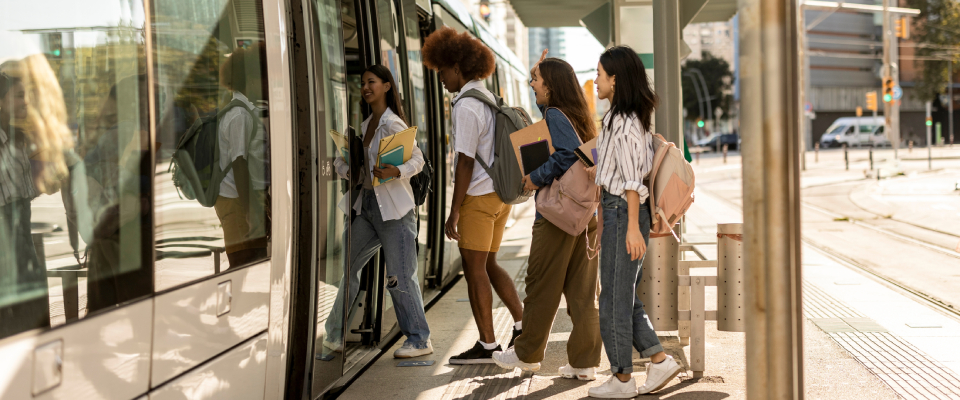
Keep in mind that FrontRunner is built around weekday commuters. Service runs roughly every 30 minutes during peak hours, with limited Saturday service and no Sunday operation, so it works best as a weekday commuting option rather than a weekend solution.
UTA Bus Network
UTA operates more than 100 bus routes across the Salt Lake Valley, and the network fills nearly every gap that rail leaves behind. Buses connect neighborhoods located beyond walking distance of TRAX or FrontRunner to grocery stores, schools, hospitals and job sites.
Several high-frequency routes, including Route 2 along 200 South, Route 9 along 900 South and Route 21 along 2100 South, run every 15 minutes during weekday peak hours, offering rail-like reliability that’s unusual for bus service. These routes serve neighborhoods like Rose Park, Glendale and parts of Millcreek that don’t yet have rail access, and most buses connect directly to a TRAX station.
Apartments near a high-frequency UTA bus stop often offer renters most of the daily flexibility of a rail-adjacent apartment at a lower rent.
S-Line Streetcar
The S-Line is a short streetcar that links the Sugar House neighborhood to the broader TRAX network at Central Pointe Station. It runs about two miles along a former rail corridor that’s now lined with a tree-shaded walking and biking trail called the S-Line Greenway.
For renters drawn to Sugar House for its restaurants, parks and mom-and-pop shops, the S-Line solves the one challenge of the neighborhood: getting in and out efficiently. Trains arrive about every 20 minutes, and a single UTA fare covers a transfer to TRAX, FrontRunner or any bus route.
If you’re renting in Sugar House and commuting downtown by rail, you’ll probably use the S-Line more than you expect.
UTA On Demand
If you’re outside the bus network, you have options, too. UTA On Demand is a microtransit service that works much like a rideshare app at the price of a regular bus fare. You request a pickup through the UTA On Demand app, and a shared shuttle picks you up within a defined service zone, dropping you at a local destination or a transit station for an onward transfer.
The service is especially useful in parts of the Westside, South Salt Lake and other neighborhoods where fixed bus coverage is thinner. Pickups generally arrive within 15 minutes, vehicles are ADA-accessible and your ride is included in your standard UTA pass.
If your apartment isn’t right on a rail line, On Demand can connect your daily errands in a way fixed-route transit alone can’t, and it makes a wider range of Salt Lake City neighborhoods realistic for car-free living.
GREENbike
Biking is a practical transportation option in Salt Lake City, not just a recreational one. The city is part of the GREENbike network, with dozens of docking stations across downtown, the University of Utah area, the Avenues and parts of Central City. Annual passes are affordable, and many renters use bike share to close the gap between a TRAX stop and their actual destination.

Salt Lake City has steadily expanded its protected bike lanes and multi-use trails, including the 9 Line Trail that cuts east to west across the south side of downtown. If you want to save time on shorter trips, bike share closes that last-mile gap.
Before signing a lease, it’s worth checking how close you are to a GREENbike docking station.
UTA Ski Service
Not every city offers a public ski bus, but Salt Lake City does. If you’re moving to there for the mountains, it’s a meaningful advantage. From late November through early April, UTA runs ski service buses from valley transit hubs straight to Alta, Snowbird, Solitude and Brighton.
The ride is included in standard UTA fares, so it won’t cost you a fortune to get up the mountain. The buses connect directly with TRAX stations, so you skip the parking shortages and winter driving up Big and Little Cottonwood Canyon entirely.
Service runs early enough on weekends to get you to the slopes for opening lifts. Keep in mind that it’s seasonal, so it serves as a winter benefit rather than a year-round option.
Does public transit matter when searching for apartments in Salt Lake City?
Where you live in Salt Lake City shapes which public transit options are within comfortable walking distance. An apartment near a TRAX station in Downtown Salt Lake City gives you a very different commuting experience from one in Sugar House served mainly by the S-Line and buses. Neither is better or worse. It depends on where you work, study and spend your weekends.
When you’re comparing apartments in Salt Lake City, think about transit the same way you think about square footage or natural light. Ask yourself:
- How far is the nearest TRAX or FrontRunner station? Anything under a 10-minute walk is excellent.
- Which UTA bus routes serve the neighborhood, and how often do they run in the evenings and on weekends?
- Is GREENbike nearby? A docking station within a block or two adds real flexibility.
- How walkable is the immediate area? Can you handle daily errands on foot without a car?
Public transit in Salt Lake City is reliable, well-connected and built around a single fare card that works across rail, bus, streetcar and microtransit. That kind of integration is rare for a city this size.
Take the time to ride a few routes before you commit to a lease. Ride TRAX during weekday rush hour, try a UTA bus on a Saturday or test the S-Line out to Sugar House. Experiencing the Salt Lake City public transit system firsthand is the best way to figure out which neighborhood fits your life.
Renting with Salt Lake City public transport in mind
Salt Lake City’s transit system works because each piece does a different job. TRAX moves you across the valley, FrontRunner pulls in commuters from neighboring cities, UTA buses cover the neighborhoods rail can’t reach and the S-Line knits Sugar House into the rest of the network. UTA On Demand fills the remaining gaps, while GREENbike handles the last mile. Finally, the seasonal Ski Service turns a winter weekend into a convenient transit trip.

The Wasatch Front is growing quickly, and Salt Lake City’s planners have been steadily expanding rail, bus and bike infrastructure to keep up. Choosing a neighborhood with strong transit access isn’t only about saving on gas this year. It’s about staying connected as the city continues to grow.
FAQ: Public transit in Salt Lake City, Utah
Q: Can I live in Salt Lake City without a car?
A: Yes, many Salt Lake City renters go car-free. Between TRAX, FrontRunner, UTA buses, the S-Line, GREENbike and UTA On Demand, most daily errands and commutes are realistic without a vehicle, especially in transit-rich neighborhoods.
Q: Which Salt Lake City neighborhoods have the best public transit access?
A: Downtown Salt Lake City, Central City, Sugar House, the University area and corridors along North Temple tend to offer the strongest combination of TRAX access, bus coverage and walkability. Neighborhoods along the FrontRunner line, including Murray and parts of South Salt Lake, also work well for commuters.
Q: How do I pay for public transit in Salt Lake City?
A: Most riders use the UTA Transit app or a FAREPAY card, a reloadable transit card accepted on TRAX, FrontRunner, UTA buses, the S-Line and UTA On Demand. A single fare typically covers transfers across modes within a set time window. GREENbike uses its own app and membership system.
Q: Does Salt Lake City transit work well for students and professionals?
A: Yes, the Red TRAX line runs directly to the University of Utah campus, and the combination of FrontRunner and TRAX covers the major job centers from downtown Salt Lake City to Lehi’s Silicon Slopes. Westminster University and Salt Lake Community College are also reachable by UTA bus routes.
Q: Are buses or trains better for renters in Salt Lake City?
A: Both play important roles. TRAX and FrontRunner handle longer trips and regional commutes, while UTA bus routes and the S-Line help renters move through neighborhoods and reach everyday destinations rail doesn’t touch.
Share this article:


Florin Petrut
Florin Petrut is a real estate writer and research analyst with RentCafe, using his experience as a social media specialist and love for storytelling to create insightful reports and studies on the rental market. With a strong interest in the renter experience, he develops data-driven resources that explore cost of living, affordable neighborhoods, and housing trends, helping renters make informed decisions about where and how they live. Florin holds a B.A. in Journalism and an M.A. in Digital Media and Game Studies.
Sign up for The Ready Renter newsletter
Get our free apartment hunting guide — plus tips, trends, and research.




Related posts
Searching for apartments in Salt Lake City? Ask these questions first
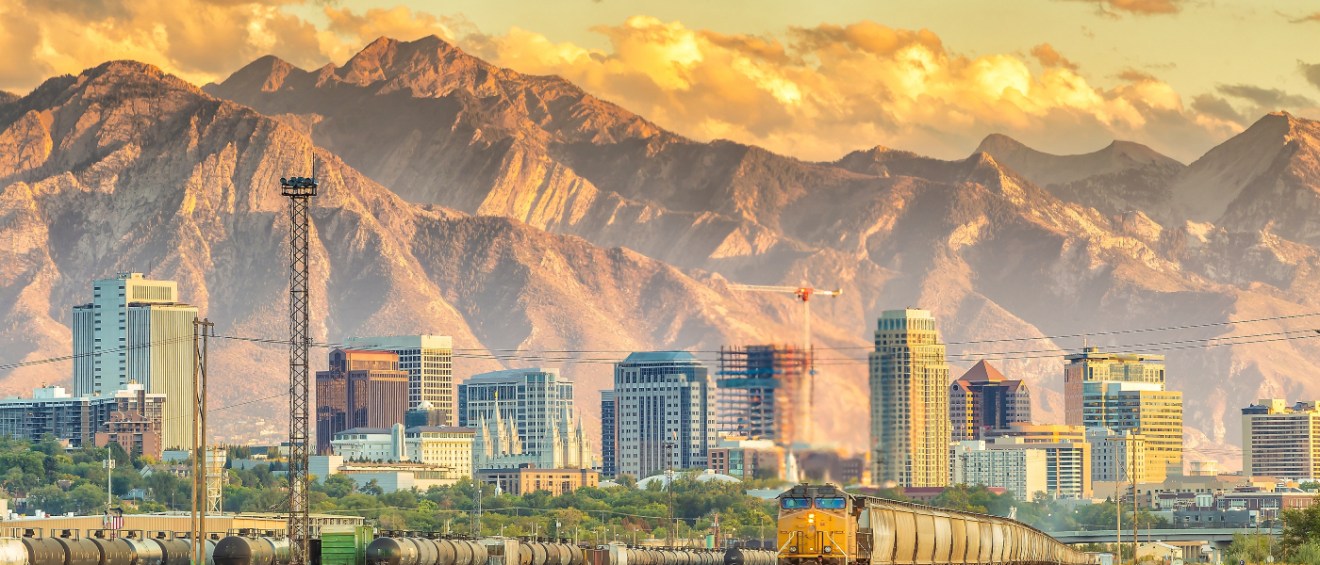
Salt Lake City sits in a wide valley with the Wasatch Range to the east and the Great Salt Lake just beyond the airport. It…

Public transit in Salt Lake City: Best options for renters
As one of the most public-transit-friendly cities in the Intermountain West, Salt Lake City makes it genuinely realistic to get around without a car. Renters…

Denver, CO vs. Salt Lake City, UT: Cost of living comparison for renters (2026)
Looking to trade the buzz of Denver for the mountains of Salt Lake City, or vice versa? Denver has long drawn renters with its mix…
Subscribe to
The Ready Renter newsletter