
Share this article:


Whether you enjoy rafting, paddleboarding or surfing, there is much to love about watersports. In fact, the last two years have seen a substantial increase in the popularity of watersports, partly due to the pandemic. And the trend is not going anywhere. Proof is that the global scuba diving market is expected to grow by $500 million until 2024. People have shown a significant increase in their interest in jet skiing, surfing, snorkeling, stand-up paddleboarding, wakeboarding and scuba diving, shows Technavio research.
As more and more people take up watersports and invest in related equipment, they will need to know how to properly protect and store their watersports gear. For now, we’ll focus on surfing and diving equipment. Following these guidelines will prolong your gear’s lifespan and ensure you’re safe and ready to have some fun.
How to Clean & Store Surfing Gear after Hitting the Waves
A common misconception is that all you need in order to surf is a board and some skill. While you do need both of these, surfing gear includes several other items that all require special care for their long-term quality maintenance. Moreover, as you become better at riding waves, you’ll want and need more than just the essentials. As well, while some places offer surfing through all four seasons, few people actually surf year round. Knowing what to do with your surfing gear in the off season or in between surfing trips is vital.
Starting with the mandatory surfing equipment, you obviously need a board, but be aware that there are several different types of boards. Each kind can have up to five fins, which provide stability and drive, as well as a leash, which is the rope that keeps you connected to the board. You’ll also need surf wax, which requires regular maintenance, or traction pads, which can last for several years. Additional gear can include a neoprene wetsuit, rash guards, surf earplugs, surfboard bags, boots, gloves, hoods, surf watches, cameras, etc.
-
Wetsuit cleaning and storing
Out of all these elements, your wetsuit requires the most special attention when it comes to cleaning and storage. Proper care will maintain its quality and function — not to mention wetsuits tend to be pricey. It would be a shame to ruin one due to improper care. The first thing you should do with a dirty suit is to rinse it in cold water and scrub it thoroughly. Don’t forget to turn it inside out and repeat the process.
Alternatively, you can soak it in cold water for 10 minutes. Keep in mind that hot water will damage the neoprene’s stretch and flexibility. Wetsuit soap, cleaner and conditioner are also viable options, but do not use regular bath soap. After washing it, hang it to dry. Allow the inside to dry first and protect it from direct sunlight. Renting a climate-controlled self storage unit is the best option when it comes to storing wetsuits for the long term. Temperature and humidity are consistent in these units, and your suit and wearable gear will be protected from sunlight, moisture and other potentially damaging factors.
-
Surfboard cleaning and storing
Cleaning your board is just as important as taking care of your wetsuit. Boards can easily accumulate old wax, water residue and other elements that can be damaging over time. Surfboard cleaners are helpful, but keep in mind that you need to melt the existing wax on the board first. Dumping hot water on it is a common solution. Afterward, removing the wax with a special wax comb is recommended, followed by applying surfboard cleaner and new wax. Check out this complete wax guide for help.
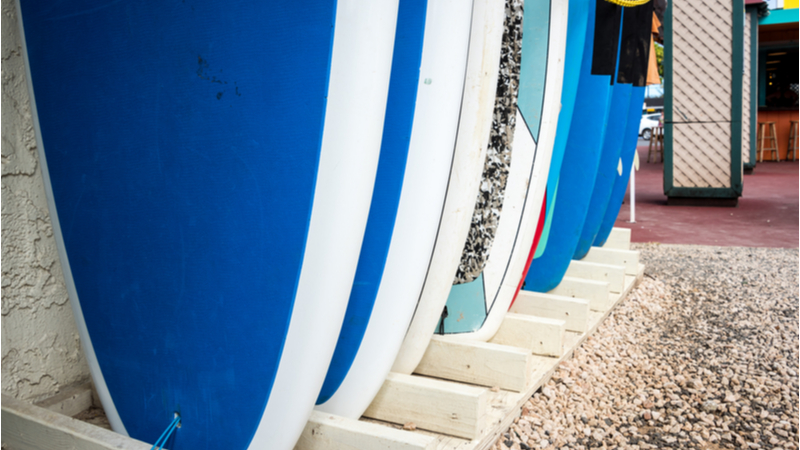
Surfboards can be an issue for storage since they take up much more space than your wearable equipment. Most people store surfboards, paddleboards and beach cruisers in a garage, but this is not always a good solution or a possibility. Keeping your board out of the sun is, yet again, vital. Along with elevated temperatures, prolonged exposure to direct sunlight can quickly ruin a board. While you can go for DIY vertical surfboard racks, freestanding slings or ceiling racks, these will quickly clutter your home. If you have more than one board, they will take up substantial living space.
Renting a self storage unit, however, is ideal. You can rest assured knowing your surfing equipment is safe and sound until you need it next, and you don’t need to spend a lot on a space since renting a 5’x10’ self storage unit should be enough to fit all your surfing gear.
How to Care for Your Diving Gear in Between Dips
-
Essential gear and pre-dive care
Few experiences are more surreal than scuba diving. But when you’re a beginner, you may not have your own equipment. After a few dives, however, you may quickly wish to become a serious diver and invest significant amounts of money in your gear. Taking care of it goes without saying since equipment tends to be expensive. Proper maintenance will prolong its lifespan and most importantly will make sure that you’re safe at all times while diving.
Pre- and post-dive care are equally important. You should start by looking for fine rubber cracks every time before a dive. These are common in heavy rubber material, so stretching out straps and properly inspecting your gear is essential. Tears are also common in the silicone of the mask skirt, the flexible hose of the snorkel and the snorkel’s mouthpiece. Check all buckles and smaller elements for cracks and possible leaks or chips.
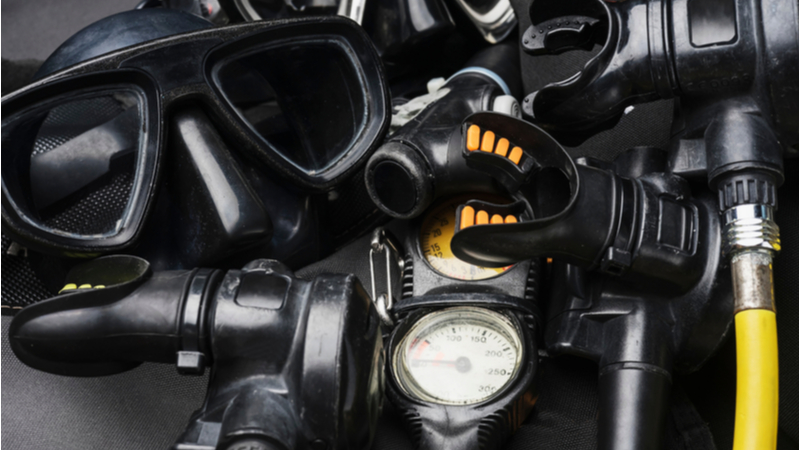
Pre-dive care also includes checking regulator hoses for cracks or corrosion. Remember to replace dust covers, make sure gauges don’t leak fluid, and check battery indicators. For a more thorough guide on buoyancy compensators and control devices, check out these instructions. Tanks should also be checked for their hydrostatic test date and visual inspection dates, tank valves and burst discs. If at any point you’re unsure of what you’re doing, it is best for your safety to consult a professional. Reviewing the manufacturer’s recommendations, and not only relying on general guidelines, is also highly recommended.
-
Essential post-dive care for your gear
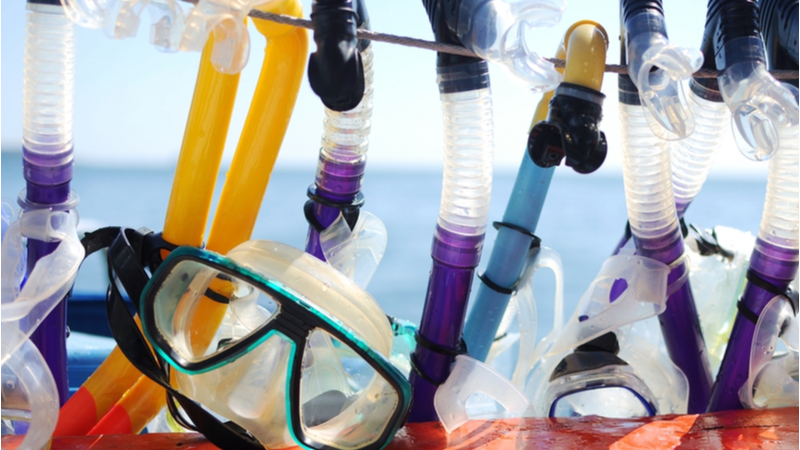
To avoid mildew growth on masks, fins and snorkels, rinse these items in warm water and dry them before packing. This is crucial, as mildew will ruin them. They also need to breathe while they are not in use, so don’t squash them together. Incorrectly storing them this way will ruin them over time. You will also want to rinse your octopus, regulator, mouthpiece, BCDs and exhaust diaphragm in warm water. Tanks require special attention, as they should never be stored completely full or empty. Storing cylinders with around 300 psi (20 bar) over a long period of time is best. If you require complete instructions with regard to gear maintenance for regulators, BCDs and suits, check out this step-by-step guide by ScubaPro.
In terms of storage, location is key. Storing equipment outdoors, especially in hot and humid climates, can quickly become a problem as it can lead to weathering, dry rot and cracks. You want to avoid heat and humidity when storing your diving gear. Cool, dry spaces with lots of room for all individual items are ideal. Since many divers lack this kind of space at home and realize that stuffing your gear in a garage will only damage it, they resort to self storage units that are preferably climate-controlled.
Age-related damage is considerably reduced in such a space, especially if you take extra precautionary measures, such as coating silicone to all rubber and metal pieces. Dry-suit zipper wax is another great alternative for zippers, gear bags and exposure suits. Masks are to be stored in rigid boxes and all items should periodically be checked for possible repairs or replacements. Finally, keep in mind that certain components will require annual inspection and relying on the services of a qualified technician is the best way to go.
Following these guidelines will make sure your gear is well-maintained in the long run. It will be safe from sunlight, moisture and other potentially damaging factors. If you live in cities like Miami, San Francisco or Jacksonville where humidity is high, you should always look into climate-controlled storage. Other than that, you’re ready to enjoy the water in all its beauty!
Share this article:


Sign up for The Ready Renter newsletter
Get our free apartment hunting guide — plus tips, trends, and research.




Related posts

Millionaire renters more than triple in 5 years, nearly half are Millennials
The number of millionaire renter households in the U.S. grew 229% between 2020 and 2024, more than tripling in just five years. While New York…

Detroit vs Chicago: Which Midwest city is more affordable for renters?
Detroit and Chicago are about 280 miles apart, making a move between the two a realistic option for many Midwestern renters. Maybe you’ve landed a…

Public transit options for renters in Newark, NJ: How to get around without a car
Newark renters can live car-free using PATH, NJ Transit rail, the Newark Light Rail and an extensive bus network, with Manhattan reachable in about 20…
Subscribe to
The Ready Renter newsletter