Share this article:


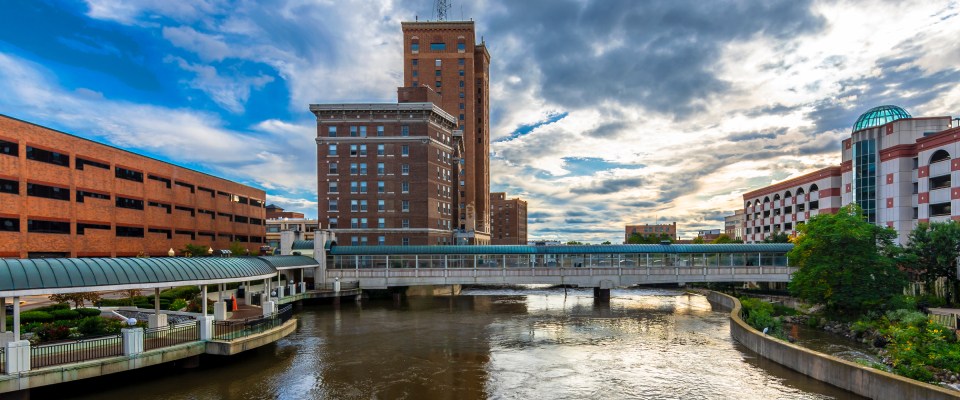
Aurora is the second-largest city in Illinois, and it’s carried the nickname City of Lights since the 1880s when it became one of the first American cities to light its streets with electricity. Renters get a full-size city on the Fox River, complete with a theater district and riverfront trails, at rents that are noticeably below what you’d pay in Chicago or in neighboring Naperville.
The range of apartments in Aurora is wide. Downtown and Stolp Island have converted lofts and older high-rise buildings with tall windows and exposed brick, while the East Side between the river and the DuPage County line is full of vintage walk-ups and two-flats. Meanwhile, the Far East Side around Fox Valley and Eola has newer garden-style communities and townhomes with attached garages.
Highlights of renting in Aurora, IL:
- Aurora spans four counties and six school districts, so two addresses a mile apart can mean different schools and tax bills.
- Two Metra BNSF stations serve the city, and the parking lot on Route 59 fills early on weekday mornings.
- Older blocks near the Fox River still run on combined sewers that can back up during heavy rain or snowmelt.
- Street and alley parking closes once snowfall reaches two inches and stays closed until plows clear the block.
- Rental properties need a city license, which means yearly renewal and an interior inspection.
Picking the right place here takes more than comparing floor plans. Aurora stretches across four counties, sits on a river with a flooding history and gets real Midwestern winters, so the useful questions on a tour are about the building and the block.
5 questions to ask when touring apartments in Aurora, IL
1. Has this apartment or the lower level of the building ever taken on water during heavy rain or snowmelt?
The answer you want: A clear no, backed by a working sump pump and no history of sewer backups on the block. If you hear “not since we replaced the pump,” ask what year that was and what happened before it.
Why it matters: Aurora’s older neighborhoods along the Fox River still rely on combined sewers, which carry sewage and storm runoff in the same pipe. A hard storm or a fast thaw can overwhelm that system and push water back into basements and garden-level apartments.
Significant stretches of downtown also sit inside FEMA-mapped floodplains, and the river has reached flood stage in recent springs. For anyone renting below grade, that means ruined belongings, mold and a year of arguing about who pays for it.
2. How many adults can legally live here?

The answer you want: A specific number. Aurora’s rental code treats up to three unrelated adults as a single household, and a home with four or more unrelated adults counts as a lodging house, which needs its own license and meets stricter parking, storage, electrical and alarm requirements.
Why it matters: Roommate groups are the ones this rule catches. Four friends splitting a house on the West Side near Aurora University sounds reasonable until you learn the property isn’t licensed for it, which puts the owner out of compliance and can put everyone out of a home mid-lease.
On top of that, Aurora requires every resident 18 and older to be named on a city lease addendum with a background check affidavit, so quietly adding a fourth person later isn’t realistic. Settle this before anyone splits a deposit.
3. Where exactly will I park, and is that spot off the street?
The answer you want: An assigned off-street space, driveway or garage spot that comes with the apartment. While you’re there, walk out to the lot and count the spaces against the number of homes in the building, then look for marked guest parking.
Why it matters: Aurora prohibits parking on city streets and alleys once snowfall hits two inches, and the ban holds until plows have finished the block. Cars left behind get ticketed and towed, and the tow plus storage fees run higher than most renters plan for.
The city’s rental code requires at least one off-street space per apartment in multifamily buildings and two per home for single-family and two-flat rentals, but older East Side properties sometimes only provide alley parking or a shared pad that fills by dinnertime. If the street is your only real option, expect to shuffle your car several times a winter.
4. Does this property have a current City of Aurora rental license, and when was the last inspection?
The answer you want: Yes, with a license that’s current and an interior inspection on record. Licenses run through August 31 each year, so a straightforward answer sounds like “we renewed this summer.” Vaguer replies, like “it’s registered,” “we’re exempt,” or “the owner handles that,” deserve a follow-up, and a manager at a larger Far East Side community should be able to confirm it on the spot.
Why it matters: Aurora licenses rental properties and inspects them from the inside, which goes further than many nearby suburbs. An owner who keeps that license current has had a city inspector look at the smoke alarms, wiring and plumbing within the past year.
On the flip side, an owner who deflects the question may be sitting on deferred repairs that become your problem, and properties with repeat code violations lose their exemptions and draw closer scrutiny. Renters looking at older converted buildings downtown gain the most from asking, since those carry the oldest systems in the city.
5. Which bills will be in my name, and how is this apartment heated?
The answer you want: A written list of what you pay and what’s included, plus a heating system you can see and adjust yourself.
Why it matters: Renters here who cover their own water get two separate bills every other month: one from the City of Aurora for drinking water and one from the Fox Metro Water Reclamation District for sewer treatment. That every-other-month rhythm catches people who budget monthly, and the sewer charge is calculated from winter water use, so a running toilet in January follows you through the year.
Heat varies just as much across apartments in Aurora, from shared boilers and radiators with no individual thermostat in converted downtown buildings to private furnaces and meters in newer communities. Find the thermostat during the tour and ask to see the meters. If there is no thermostat in the apartment, that means you don’t control the heat.
Renting in Aurora comes down to more than whether you like the kitchen. Combined sewers, the winter parking ban and the city’s licensing and household rules are what shape an ordinary Tuesday, and asking about them on a tour only takes five minutes.
Before you sign, walk the block at the hour you’d actually be getting home. Time the drive to the Metra station, find the closest grocery store and picture a full Saturday of errands starting at that front door.
FAQ
A: Basement and garden-level apartments in Aurora’s older river-adjacent neighborhoods can take on water. Those blocks still use combined drains that carry sewage and storm runoff through one pipe. Parts of downtown also fall inside FEMA-mapped floodplains, so ask the landlord directly whether the building has had water before.
A: Aurora’s rental code counts up to three unrelated adults as one household, and any home with four or more needs a separate lodging house license with stricter parking and safety requirements. Ask the landlord to confirm the property’s license type before a fourth roommate signs anything.
A: Aurora bans parking on city streets and alleys once snowfall reaches two inches, and the ban holds until plows have cleared the block, with ticketing and towing to back it up. Confirm you get an assigned off-street space, then count the spaces in the lot against the number of homes in the building while you’re touring.
A: Yes, rental properties in Aurora must hold a city license that expires Aug. 31 each year and generally comes with an interior inspection. Answers range from a clear renewal date to a claimed exemption, so ask for the current license status and the date of the most recent inspection.
A: That depends on the lease, but renters who pay for their own water and sewage service receive two separate bills every other month, one from the City of Aurora for water and one from Fox Metro for sewer treatment. Ask to see recent bills, and check during the tour whether the apartment has its own thermostat and meters.
Share this article:


Florin Petrut
Florin Petrut is a real estate writer and research analyst with RentCafe, using his experience as a social media specialist and love for storytelling to create insightful reports and studies on the rental market. With a strong interest in the renter experience, he develops data-driven resources that explore cost of living, affordable neighborhoods, and housing trends, helping renters make informed decisions about where and how they live. Florin holds a B.A. in Journalism and an M.A. in Digital Media and Game Studies.
Sign up for The Ready Renter newsletter
Get our free apartment hunting guide — plus local insights, trends and research.




Related posts

Detroit vs Chicago: Which Midwest city is more affordable for renters?
Detroit and Chicago are about 280 miles apart, making a move between the two a realistic option for many Midwestern renters. Maybe you’ve landed a…

Public transit options for renters in Newark, NJ: How to get around without a car
Newark renters can live car-free using PATH, NJ Transit rail, the Newark Light Rail and an extensive bus network, with Manhattan reachable in about 20…
Touring apartments in Aurora, IL? Ask these five questions first
Aurora is the second-largest city in Illinois, and it’s carried the nickname City of Lights since the 1880s when it became one of the first…
Subscribe to
The Ready Renter newsletter