
Share this article:


If you’re trying to prevent barking, it helps to first understand why dogs do it. Barking is normal and often useful — dogs use it to communicate, ask for attention, or react to something happening around them. But when a dog barks nonstop, especially while you’re away, it can lead to stressed-out neighbors and a lot of frustration.
The good news: once you understand the cause, you can take steps to prevent your dog from barking in a way that’s gentle, consistent, and effective.
Here are simple strategies to help reduce excessive barking and create a calmer environment in your rental apartment.

1. Start with basic training
Training helps your dog understand when it’s time to be quiet and gives them clear guidance.
Try these approaches:
- Crate training or using a safe playpen
- Teaching a “quiet” cue during calm moments
- Working with a trainer if the barking is intense or persistent
Training works best when you stay consistent and reward the behaviors you want to see.
2. Add entertainment and mental stimulation
Boredom is one of the biggest reasons dogs bark nonstop. Keeping your dog busy helps prevent barking before it starts.
Use these tools:
- Puzzle toys
- Frozen treats
- Chew toys
- Snuffle mats or slow feeders
Mental activity can be just as tiring as physical exercise for most dogs.
3. Increase physical exercise
A well-exercised dog is more relaxed and less reactive to triggers that might cause barking.
Try adding:
- A longer morning walk
- An extra play session
- Sniff-based walks for added mental stimulation
If you’re short on time, a dog walker or drop-in service can help keep your dog active during the day.

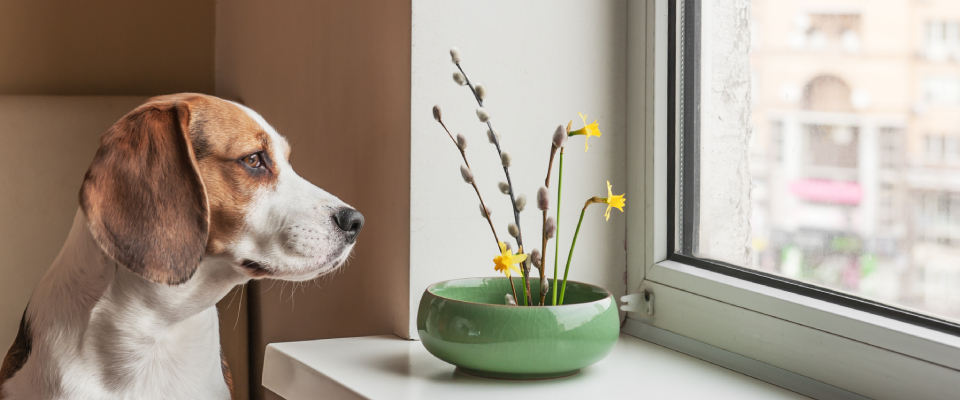
4. Limit outside views
Many dogs bark because they see movement outside — people, cars, squirrels, or delivery drivers.
You can try the following too reduce visual triggers:
- Closing the blinds or curtains during the day
- Using privacy window film
- Moving furniture around so your dog can’t sit and watch the window
Less visual input often means less barking throughout the day.
5. Reduce outside noise
Noise is another major trigger that gets dogs barking. To help your dog stay calm, try:
- Leaving the TV or radio on at a low volume
- Playing white noise or calming music
- Choosing “dog TV” content designed to reduce anxiety
These background sounds can make your dog feel less alone and help mask outside activity.
6. Use positive reinforcement
Rewarding quiet moments helps teach your dog that calm behavior gets them what they want.
Try these techniques:
- Treat your dog when they stop barking on their own
- Praise them during calm behavior
- Give attention only when they’re quiet
Over time, they’ll learn that being calm is the best way to get your attention.
7. Check for separation anxiety
If barking continues despite training and stimulation, your dog may be experiencing separation anxiety. Signs include pacing, whining, destructive behavior, or getting agitated when you leave.
If you notice these signs, you should:
- Talk to your vet about your concerns
- Rule out any underlying medical issues
- Explore behavior plans or anxiety treatment options
Always consult with your vet before considering any medication options.
8. Try calming aids when appropriate
Gentle calming tools can support your training efforts, though they work best alongside consistent training.
Options include:
- Pheromone diffusers or collars
- Anxiety jackets or wraps
- Calming sprays recommended by your vet
These tools don’t replace training, but they can help soothe anxious dogs during the process.
9. Use a pet sitter or drop-in visitor
If your dog doesn’t enjoy being alone for long periods, regular check-ins can help break up their day.
A sitter can provide:
- Exercise and playtime
- Bathroom breaks
- Companionship and attention
This approach can dramatically reduce barking caused by loneliness or excess energy.

Final thoughts
Preventing excessive barking starts with understanding what your dog is trying to communicate. Once you identify the trigger — whether it’s boredom, anxiety, excitement, or outside activity — you can use training, enrichment, and gentle calming tools to help your dog feel more relaxed.
With consistent routines and a little patience, you can reduce excessive barking and create a calmer home for both you and your pup.
Share this article:


Mihaela Buzec
Mihaela Buzec is a senior writer, researcher, and online content developer for RentCafe, where she has over 7 years of experience writing about the real estate industry. She authors important resources such as the statistics pages describing generational patterns and renter's guides that help renters in their journey. Her work has appeared in publications such as Apartment Therapy, Indy Star, and Investopedia.
Mihaela is a published researcher who is active in academia as well. She holds a BA in English, an MA in linguistics, and a PhD in neurolinguistics.
Sign up for The Ready Renter newsletter
Get our free apartment hunting guide — plus apartment living tips, trends and research.




Related posts

Moving with pets during peak summer heat: What every renter should know
Most leases in the U.S. end between May and September, which means most renters move during the hottest months of the year. If you’re moving…

9 Tips to prevent your dog from barking in the apartment
If you’re trying to prevent barking, it helps to first understand why dogs do it. Barking is normal and often useful — dogs use it…

From Fur to Floors: A Pet Owners’ Guide to Apartment Maintenance
Nothing beats coming home to a wagging tail or a gentle purr. But renting with pets also comes with responsibilities. And when you live in…
Subscribe to
The Ready Renter newsletter